CAS 223771-83-3
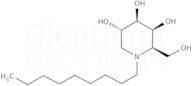
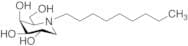
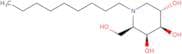
:(2R,3S,4R,5S)-2-(Hydroxymethyl)-1-nonyl-3,4,5-piperidinetriol
Description:
The chemical substance known as (2R,3S,4R,5S)-2-(Hydroxymethyl)-1-nonyl-3,4,5-piperidinetriol, with the CAS number 223771-83-3, is a complex organic compound characterized by its piperidine ring structure, which is a six-membered nitrogen-containing heterocycle. This compound features multiple hydroxymethyl groups, contributing to its hydrophilicity and potential for forming hydrogen bonds, which can influence its solubility and reactivity. The stereochemistry indicated by the (2R,3S,4R,5S) configuration suggests that it has specific spatial arrangements of its substituents, which can significantly affect its biological activity and interactions with other molecules. Such compounds may exhibit properties relevant to medicinal chemistry, particularly in the development of pharmaceuticals, due to their ability to interact with biological targets. Additionally, the presence of a nonyl chain suggests potential lipophilicity, which can influence membrane permeability and bioavailability. Overall, this compound's unique structural features make it a subject of interest in various chemical and biological research fields.
Formula:C15H31NO4
Synonyms:- N-Nonyl-deoxygalactojirimycin
- N-nonyl-DGJ
- Alkovir
- 1,5-Dideoxy-1,5-(nonylimino)-D-galactitol
Sort by
Purity (%)
0
100
|
0
|
50
|
90
|
95
|
100
Found 3 products.
N-(n-Nonyl)deoxygalactonojirimycin
CAS:Controlled ProductFormula:C15H31NO4Color and Shape:NeatMolecular weight:289.41N-Nonyldeoxygalactonojirimycin
CAS:N-Nonyldeoxygalactonojirimycin (NDGJ) is a novel antiviral agent that inhibits the activity of viral enzymes, such as polymerase chain reaction and reverse transcriptase. NDGJ has been shown to inhibit the replication of hepatitis viruses in primary cells and human macrophages. The drug also inhibits the replication of human pathogens, such as HIV-1, herpes simplex virus type 1, and cytomegalovirus in cell culture. NDGJ has an effect on hydrophobic amino acids in protein synthesis by binding to them and preventing their attachment to the ribosomal surface. This leads to cell lysis through a process called osmotic shock.
Formula:C15H31NO4Purity:Min. 95 Area-%Color and Shape:White Off-White PowderMolecular weight:289.41 g/mol