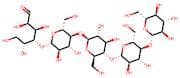
CAS 2240-27-9
:cellopentaose
- D-(+)-Cellopentaose
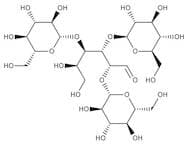
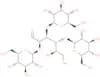
- beta-D-glucopyranosyl-(1->2)-[beta-D-glucopyranosyl-(1->3)]-[beta-D-glucopyranosyl-(1->4)]-D-glucose
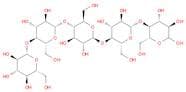
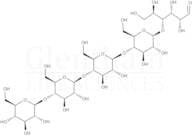
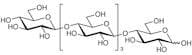
- β-D-glucopyranosyl-(1->4)-β-D-glucopyranosyl-(1->4)-β-D-glucopyranosyl-(1->4)-β-D-glucopyranosyl-(1->4)-D-glucopyranose
- O-β-D-Glucopyranosyl-(1-4)-O-β-D-glucopyranosyl-(1-4)-O-β-D-glucopyranosyl-(1-4)-O-β-D-glucopyranosyl-(1-4)-D-glucose
- O-beta-D-Glucopyranosyl-(1→
- D-Glucose, O-.beta.-D-glucopyranosyl-(1?4)-O-.beta.-D-glucopyranosyl-(1?4)-O-.beta.-D-glucopyranosyl-(1?4)-O-.beta.-D-glucopyranosyl-(1?4)-
- [BETA-D-GLC-(1->4)]4-D-GLC
- (β-D-Glc-[1-4])4-D-Glc, D(+)-Cellopentaose
- O-beta-D-Glucopyranosyl-(1-4)-O-beta-D-glucopyranosyl-(1-4)-O-beta-D-glucopyranosyl-(1-4)-O-beta-D-glucopyranosyl-(1-4)-D-glucose
- (β-d-glc-[1→4])4-d-glc
- CELLOPENTAOSE
- See more synonyms
D-(+)-Cellopentaose, 95%
CAS:Used by cellulosic bacteria as an energy source. Used to identify, differentiate and characterize oligosaccharide metabolizing enzymes such as endoglucanases and --glucosidase(s). Can also be used in saccharification and ethanol fermentation research. This Thermo Scientific Chemicals brand product wFormula:C24H42O21Purity:95%Color and Shape:Powder or crystals or crystalline powder, WhiteMolecular weight:666.58Cellopentaose
CAS:Formula:C30H52O26Purity:>95.0%(HPLC)Color and Shape:White to Almost white powder to crystalMolecular weight:828.72D-(+)-Cellopentaose
CAS:D-(+)-CellopentaoseFormula:C30H52O26Purity:≥95%Color and Shape: white crystalline powderMolecular weight:828.72g/molD-(+)-Cellopentaose
CAS:Controlled ProductApplications D-(+)-Cellopentaose (cas# 2240-27-9) is a compound useful in organic synthesis.
Formula:C30H52O26Color and Shape:NeatMolecular weight:828.72D-Cellopentaose
CAS:Cellotriose is a bifunctional sugar that can be chemically converted to cellobiose and D-cellopentaose. Cellotriose is a component of cellulose, which is the most abundant biopolymer on Earth. Cellotriose is a source of chitin, which is a major component of the exoskeleton of insects and crustaceans. The molecule has been observed using atomic force microscopy to have an amphiphilic nature, in that it has both hydrophobic and hydrophilic regions. Cellotriose has been synthesized in the laboratory for use as an artificial sweetener, but it does not taste as good as sucrose because it lacks the sweetness profile. When heated, cellotriose undergoes a color change from yellow to blue-green due to its ability to form hydrogen bonds with oxygen molecules. This property can be used as a colorimetric test for cellulase activity in solutions.
Formula:C30H52O26Purity:Min. 95%Color and Shape:White Off-White PowderMolecular weight:828.72 g/molRef: 3D-OC04683
Discontinued product