CAS 22416-58-6
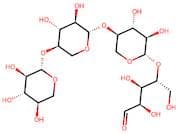
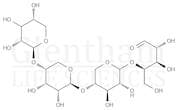
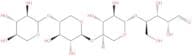
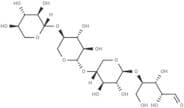
:D-Xylose, O-b-D-xylopyranosyl-(1®4)-O-b-D-xylopyranosyl-(1®4)-O-b-D-xylopyranosyl-(1®4)-
Description:
The chemical substance known as D-Xylose, O-b-D-xylopyranosyl-(1→4)-O-b-D-xylopyranosyl-(1→4)-O-b-D-xylopyranosyl-(1→4)-, with the CAS number 22416-58-6, is a complex polysaccharide derived from D-xylose, a five-carbon sugar (pentose). This compound features a repeating structure of β-D-xylopyranosyl units linked through β-(1→4) glycosidic bonds, which contributes to its stability and solubility in water. D-Xylose is a naturally occurring sugar found in various plant materials, particularly in hemicellulose, and plays a role in carbohydrate metabolism. Its structural characteristics allow it to participate in various biochemical processes, including serving as a substrate for enzymes involved in polysaccharide degradation. The compound is of interest in both food science and biochemistry, particularly for its potential applications in the development of prebiotics and functional foods. Additionally, its unique structure may influence its interaction with other biomolecules, making it a subject of research in the fields of nutrition and health.
Formula:C20H34O17
Synonyms:- Xylotetraose(6CI,7CI,8CI)
- Xylotetrose
Sort by
Purity (%)
0
100
|
0
|
50
|
90
|
95
|
100
Found 8 products.
Xylotetraose
CAS:Xylotetraose is a hydrolysis product of Xylan.Formula:C20H34O17Purity:99.72% - ≥95%Color and Shape:SolidMolecular weight:546.47Xylotetrose
CAS:Applications Xylotetrose is a xylose oligomer that is of interest to many fields of study and is an intermediate reaction product of the hydrolysis of hemicelluloses.
References Bunnell, K., et al.: J. Liq. Chromatogr. R. T., 38, 801 (2015)Formula:C20H34O17Color and Shape:NeatMolecular weight:546.471,4-β-D-Xylotetraose
CAS:1,4-β-D-Xylotetraose is a sugar that is found in the genus Talaromyces and is used as a sweetener. It is produced by plant cells and has been shown to have thermostability. 1,4-β-D-Xylotetraose has been found to have lipidomic activity, which may be related to its ability to bind lipids. It also has a dietary profile, which may contribute to its use as a supplement. 1,4-β-D-Xylotetraose can be used as an affinity agent for lipid profiling because it binds lipids with high affinity.Formula:C20H34O17Purity:Min. 95 Area-%Color and Shape:White Off-White PowderMolecular weight:546.47 g/mol