CAS 2243-82-5
:2-Naphthalenecarboxamide
Description:
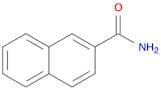
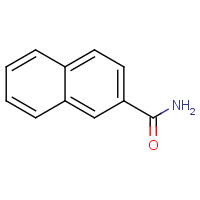
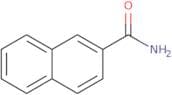
2-Naphthalenecarboxamide, also known as 2-naphthylcarbamide, is an organic compound characterized by its naphthalene structure with a carboxamide functional group attached to the second position of the naphthalene ring. It typically appears as a white to off-white crystalline solid and is soluble in organic solvents such as ethanol and acetone, but has limited solubility in water. The compound exhibits properties typical of amides, including the ability to participate in hydrogen bonding, which can influence its melting point and boiling point. 2-Naphthalenecarboxamide is of interest in various fields, including pharmaceuticals and materials science, due to its potential biological activities and applications in organic synthesis. Its molecular structure allows for interactions with biological targets, making it a candidate for further research in medicinal chemistry. Safety data should be consulted for handling and exposure guidelines, as with any chemical substance.
Formula:C11H9NO
InChI:InChI=1S/C11H9NO/c12-11(13)10-6-5-8-3-1-2-4-9(8)7-10/h1-7H,(H2,12,13)
InChI key:InChIKey=JVXXKQIRGQDWOJ-UHFFFAOYSA-N
SMILES:C(N)(=O)C1=CC2=C(C=C1)C=CC=C2
Synonyms:- 2-Naphthalenecarboxamide
- 2-Naphthamide
- 2-Naphthylamide
- NSC 171209
Sort by
Purity (%)
0
100
|
0
|
50
|
90
|
95
|
100
Found 4 products.
Naphthalene-2-carboxamide
CAS:Formula:C11H9NOPurity:98%Color and Shape:SolidMolecular weight:171.1953beta-Naphthamide
CAS:Beta-naphthamide is an inhibitor binding to the dinucleotide phosphate (DNP) in bacterial cells. This binding prevents the enzyme from carrying out its normal function, which is the production of ATP, and it also inhibits various other enzymes. Beta-naphthamide inhibits the growth of Gram-positive bacteria by inhibiting their cell wall assembly and also has a bactericidal effect on Gram-negative bacteria. Beta-naphthamide has been shown to be active against multidrug efflux pump proteins that are present in Gram-negative bacteria, such as Escherichia coli. DNP is a receptor for dopamine and beta-naphthamide inhibits dopamine receptors in mammalian cells, which may lead to Parkinson's disease. Beta-naphthamide has been shown to inhibit the polymerase chain reaction (PCR) mechanism by binding to DNA polymerase. Beta-naphthamide binds to receptors on trigeminal nerve endings, which leads to paralysis ofFormula:C11H9NOPurity:Min. 95%Molecular weight:171.2 g/mol