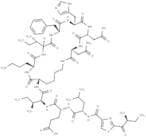
![N-{[2-(2-methylbutanoyl)-1,3-thiazol-4-yl]carbonyl}leucyl-alpha-glutamyl-N-[3-(2-amino-2-oxoethyl)…](/_next/image/?url=https%3A%2Fstatic.cymitquimica.com%2Fcas-image%2Fthumb-webp%2F304955-n-2-2-methylbutanoyl-13-thiazol-4-yl-carbonyl-leucyl-alpha-glutamyl-n-3-2-amino-2-oxoethyl-18-3-aminopropyl-12-benzyl-6-carboxymethyl-9-1h-imidazol-5-ylmethyl-15-1-methylpropyl-25811141720-heptaoxo-14710131619-heptaazacyclopent.webp&w=3840&q=75)
CAS 22601-63-4
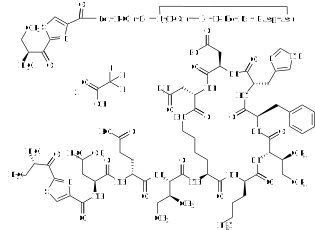
:N-{[2-(2-methylbutanoyl)-1,3-thiazol-4-yl]carbonyl}leucyl-alpha-glutamyl-N-[3-(2-amino-2-oxoethyl)-18-(3-aminopropyl)-12-benzyl-6-(carboxymethyl)-9-(1H-imidazol-5-ylmethyl)-15-(1-methylpropyl)-2,5,8,11,14,17,20-heptaoxo-1,4,7,10,13,16,19-heptaazacyclopent
Bacitracin EP Impurity E Ditrifluoroacetate (Bacitracin F Ditrifluoroacetate)
CAS:Formula:C66H98N16O17S·2C2HF3O2Color and Shape:White To Off-White SolidMolecular weight:1419.67 2*114.02Bacitracin F (~75%)
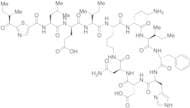
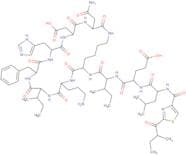
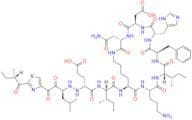
CAS:Applications Bacitracin F is a major Bacitracin (B106500) analog, a peptide antibiotic used as an inhibitor of protein disulfide isomerase (PDI).
References Freedman, R., et al.: Cell, 57, 1069 (1989); Noiva, R., et al.: J. Biol. Chem., 267, 3553 (1992); Ikai, Y., et al.: J. Antibiot., 48, 233 (1995); Lovat, P., et al.: Cancer Res., 68, 5363 (2008); Byrne, L., et al.: Biochem. J., 423, 209 (2009); Dickerhof, N., et al.: FEBS J., 278, 2034 (2011)Formula:C66H98N16O17SPurity:~75%Color and Shape:NeatMolecular weight:1419.65Bacitracin F
CAS:Bacitracin is a polypeptide antibiotic that inhibits bacterial cell wall synthesis by binding to the lipid II precursor. It has been shown to inhibit the growth of human pathogens, including Staphylococcus aureus, Enterococcus faecalis, and Streptococcus pneumoniae. The biological activity of bacitracin F is sensitive to pH and can be inhibited by hydroxide solution or hydrochloric acid. The disulfide bond in bacitracin F can be cleaved using sodium hydroxide solution. Chromatographic techniques were used to identify this disulfide bond in bacitracin F.
Formula:C66H98N16O17SPurity:Min. 95%Molecular weight:1,419.6 g/molBacitracin F
CAS:Bacitracin F is a major Bacitracin analog -- a peptide antibiotic used as an inhibitor of protein disulfide isomerase (PDI).Formula:C66H98N16O17SColor and Shape:SolidMolecular weight:1419.65