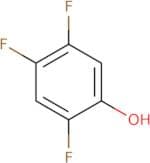
CAS 2268-16-8
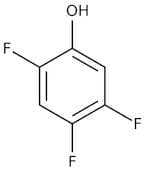
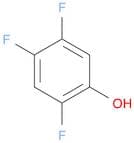
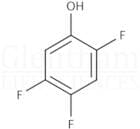
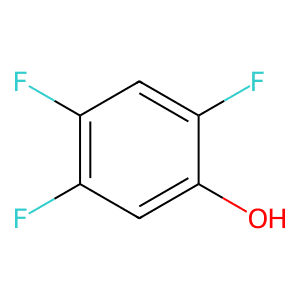
:2,4,5-Trifluorophenol
- Phenol, 2,4,5-trifluoro-
2,4,5-Trifluorophenol, 94%
CAS:This Thermo Scientific Chemicals brand product was originally part of the Alfa Aesar product portfolio. Some documentation and label information may refer to the legacy brand. The original Alfa Aesar product / item code or SKU reference has not changed as a part of the brand transition to Thermo SciFormula:C6H3F3OPurity:94%Color and Shape:Fused solid, Pale cream to pale brownMolecular weight:148.082,4,5-Trifluorophenol
CAS:2,4,5-TrifluorophenolFormula:C6H3F3OPurity:98%Color and Shape: white/colourless fused solidMolecular weight:148.08g/mol2,4,5-Trifluorophenol
CAS:2,4,5-Trifluorophenol is a chemical compound that is used in the production of plastics and synthetic fibers. It is also found as an environmental pollutant when released into the environment from industrial waste. Trichloroacetic acid reacts with 2,4,5-trifluorophenol to produce dibenzodioxins that are toxic and mutagenic. Trifluorophenol has been shown to activate rat hepatocytes by increasing the rate of synthesis of messenger RNA (mRNA) for proteins involved in drug metabolism. This activation may be due to its ability to induce oxidative stress or because it can react with DNA bases to form covalent adducts. The photoelectron spectrum includes bands at 1210 and 1240 cm-1 that correspond to chlorine atoms attached to arene rings.
2,4,5-Trifluorophenol has been shown to inhibit the growth of primary cultures of rat hepatocytesFormula:C6H3F3OPurity:Min. 95%Color and Shape:PowderMolecular weight:148.08 g/mol