CAS 226878-01-9
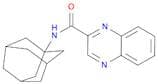
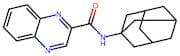
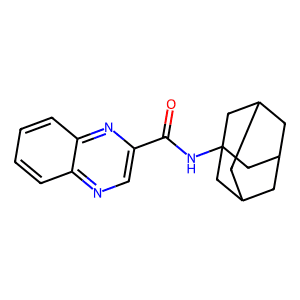
:N-(1-Adamantyl)quinoxaline-2-carboxamide
Description:
N-(1-Adamantyl)quinoxaline-2-carboxamide is a chemical compound characterized by its unique structure, which combines an adamantyl group with a quinoxaline moiety. This compound features a carboxamide functional group, contributing to its potential biological activity. The adamantyl group, known for its rigid and cage-like structure, enhances the lipophilicity and metabolic stability of the molecule. Quinoxaline derivatives are often studied for their pharmacological properties, including antimicrobial and anticancer activities. The presence of the carboxamide group may also facilitate hydrogen bonding, influencing the compound's solubility and interaction with biological targets. This compound is typically synthesized through organic reactions involving the appropriate precursors, and its properties can be further explored through various analytical techniques such as NMR, mass spectrometry, and X-ray crystallography. Overall, N-(1-Adamantyl)quinoxaline-2-carboxamide represents a class of compounds with potential applications in medicinal chemistry and drug development.
Formula:C19H21N3O
Synonyms:- Nps-2390
Sort by
Purity (%)
0
100
|
0
|
50
|
90
|
95
|
100
Found 6 products.
N-(Adamantan-1-Yl)Quinoxaline-2-Carboxamide
CAS:N-(Adamantan-1-Yl)Quinoxaline-2-CarboxamidePurity:98%Molecular weight:307.39g/molNPS2390
CAS:NPS2390 is a first generation quinoxaline derivative that acts as a noncompetitive antagonist of mGluR1 and mGluR5 (IC50 of 5.2 and 82 nM, respectively)Formula:C19H21N3OPurity:97.13%Color and Shape:SolidMolecular weight:307.39NPS 2390
CAS:Controlled ProductNPS 2390 is a dinucleotide phosphate that inhibits the mitochondrial membrane potential, leading to apoptosis. NPS 2390 also inhibits the receptor activity and signal pathways of apoptosis. It has been shown to cause an increase in pro-apoptotic proteins and decrease in anti-apoptotic proteins in human osteosarcoma cells. This drug also affects cell nuclei by altering the morphology of nuclear chromatin and decreasing DNA content. The physiological levels of this drug are low and it does not have any effect on cells at these levels. At higher doses, NPS 2390 can cause cell death in both cancerous and healthy cells.Formula:C19H21N3OPurity:Min. 95%Molecular weight:307.39 g/mol