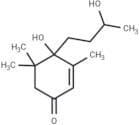
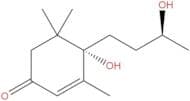
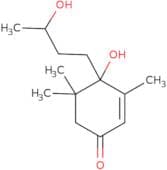
CAS 22841-42-5
:2-Cyclohexen-1-one,4-hydroxy-4-(3-hydroxybutyl)-3,5,5-trimethyl-
Description:
2-Cyclohexen-1-one, 4-hydroxy-4-(3-hydroxybutyl)-3,5,5-trimethyl- is an organic compound characterized by its unique structure, which includes a cyclohexene ring and multiple functional groups. This compound features a ketone group (the cyclohexenone structure), a hydroxyl group, and a branched hydroxybutyl substituent, contributing to its potential reactivity and solubility properties. The presence of multiple methyl groups enhances its hydrophobic character, while the hydroxyl groups increase its polarity, allowing for potential hydrogen bonding interactions. This compound may exhibit interesting biological activities due to its structural features, making it of interest in fields such as medicinal chemistry and organic synthesis. Its CAS number, 22841-42-5, allows for easy identification in chemical databases. Overall, the compound's characteristics suggest it could be utilized in various applications, including as a precursor in organic synthesis or as a potential bioactive agent.
Formula:C13H22O3
Synonyms:- 4-(1-Hydroxy-4-keto-2,6,6-trimethyl-2-cyclohexen-1-yl)-butan-2-ol
- 4-(1-Hydroxy-4-oxo-2,6,6-trimethyl-2-cyclohexen-1-yl)-2-butanol
- (4S)-4-Hydroxy-4-[(3S)-3-hydroxybutyl]-3,5,5-trimethyl-2-cyclohexen-1-one
- 4-(1-Hydroxy-4-oxo-266-trimethyl-2-cyclohexen-1-yl)-2-butanol/9-EpiblumenolB
- 2-Cyclohexen-1-one, 4-hydroxy-4-(3-hydroxybutyl)-3,5,5-trimethyl-
- 9-Epiblumel B
- 9-EpibluMenol B
Sort by
Purity (%)
0
100
|
0
|
50
|
90
|
95
|
100
Found 3 products.
9-Epiblumenol B
CAS:9-Epiblumenol B is a natural product for research related to life sciences. The catalog number is TN3317 and the CAS number is 22841-42-5.Formula:C13H22O3Purity:98%Color and Shape:SolidMolecular weight:226.319-Epiblumenol B
CAS:9-Epiblumenol B is a sesquiterpene, which is a class of terpenes consisting of three isoprene units. It is derived from natural sources, particularly from certain plants or fungi known for producing terpenoid compounds. This compound exhibits its mode of action primarily through interaction with microbial cell components, potentially disrupting vital processes of bacterial cells, thereby exerting antibacterial effects.
Formula:C13H22O3Purity:Min. 95%Molecular weight:226.31 g/mol