


CAS 22876-19-3
:5-Chloro-2-mercaptobenzoxazole
Description:
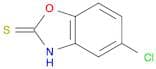
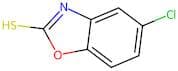
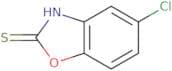
5-Chloro-2-mercaptobenzoxazole is an organic compound characterized by its heterocyclic structure, which includes a benzoxazole ring with a chlorine substituent and a thiol (mercapto) group. This compound typically appears as a solid and is known for its potential applications in various fields, including pharmaceuticals and agrochemicals. The presence of the chlorine atom enhances its reactivity, while the mercapto group contributes to its ability to form thiolates and participate in nucleophilic reactions. It is often utilized in the synthesis of other chemical entities due to its functional groups, which can engage in diverse chemical transformations. Additionally, 5-Chloro-2-mercaptobenzoxazole may exhibit biological activity, making it of interest in medicinal chemistry. Safety data should be consulted, as compounds containing chlorine and thiol groups can pose health risks and require careful handling. Overall, this compound exemplifies the complexity and utility of heterocyclic compounds in chemical research and application.
Formula:C7H4ClNOS
InChI:InChI=1S/C7H4ClNOS/c8-4-1-2-6-5(3-4)9-7(11)10-6/h1-3H,(H,9,11)
InChI key:InChIKey=BOBIZYYFYLLRAH-UHFFFAOYSA-N
SMILES:S=C1OC=2C(N1)=CC(Cl)=CC2
Synonyms:- 2(3H)-Benzoxazolethione, 5-chloro-
- 2-Benzoxazolethiol, 5-chloro-
- 2-Benzoxazolinethione, 5-chloro-
- 2-Mercapto-5-chlorobenzoxazole
- 5-Chloro-1,3-benzoxazole-2-thiol
- 5-Chloro-2(3H)-benzoxazolethione
- 5-Chloro-2-benzoxazolethiol
- 5-Chloro-2-benzoxazolinethione
- 5-Chloro-2-mercapto-benzoxazol
- 5-Chloro-2-mercaptobenzoxazole
- 5-Chloro-2-thioxobenzoxazoline
- 5-Chloro-benzooxazole-2-thiol
- 5-chlorobenzo[d]oxazole-2(3H)-thione
- See more synonyms
Sort by
Purity (%)
0
100
|
0
|
50
|
90
|
95
|
100
Found 5 products.
5-Chlorobenzooxazole-2-Thiol
CAS:Formula:C7H4ClNOSPurity:98%Color and Shape:SolidMolecular weight:185.63085-Chloro-1,3-benzoxazole-2-thiol
CAS:5-Chloro-1,3-benzoxazole-2-thiolPurity:≥95%Molecular weight:185.63g/mol5-Chloro-2-mercaptobenzoxazole
CAS:5-Chloro-2-mercaptobenzoxazole is an antibacterial agent that binds to the G protein-coupled receptor subtype. It has been shown to reduce inflammatory pain and increase gastrointestinal motility. 5-Chloro-2-mercaptobenzoxazole interacts with a number of other molecules, such as proteins, DNA, RNA and lipids. This drug has been shown to have cytotoxic effects against human cancer cells in vitro. The molecular structure of 5-chloro-2 mercaptobenzoxazole is a heterocycle which can be synthesized. 5-Chloro-2 mercaptobenzoxazole binds to the G protein coupled receptor subtype and inhibits inflammatory pain by blocking substance P from binding to its receptor. It also increases gastrointestinal motility by interacting with receptors found in the smooth muscle cells of the intestines. 5-Chloro-2 mercaptobenzoxFormula:C7H4CINSOPurity:Min. 95%Color and Shape:White To Off-White SolidMolecular weight:185.63 g/mol5-Chlorobenzo[d]oxazole-2-thiol
CAS:Formula:C7H4ClNOSPurity:95.0%Color and Shape:SolidMolecular weight:185.63




![5-Chlorobenzo[d]oxazole-2-thiol](/_next/image/?url=https%3A%2Fstatic.cymitquimica.com%2Fproducts%2F10%2Fthumb%2FF238983.jpg&w=3840&q=75)
