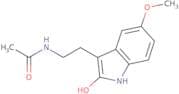
CAS 229018-17-1
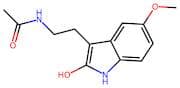
:2-HydroxyMelatonin
Description:
2-HydroxyMelatonin is a derivative of melatonin, a hormone primarily involved in regulating sleep-wake cycles. This compound is characterized by the presence of a hydroxyl (-OH) group at the 2-position of the indole ring, which distinguishes it from melatonin. It exhibits antioxidant properties, potentially contributing to its biological effects. The molecular structure of 2-HydroxyMelatonin allows it to interact with various biological targets, including melatonin receptors, which may influence circadian rhythms and sleep patterns. Additionally, it has been studied for its potential neuroprotective effects and its role in modulating oxidative stress. The compound is soluble in organic solvents and exhibits stability under physiological conditions, making it a subject of interest in pharmacological research. Its synthesis typically involves chemical modifications of melatonin or related compounds. Overall, 2-HydroxyMelatonin represents a significant area of study in understanding the broader implications of melatonin derivatives in health and disease.
Formula:C13H16N2O3
Synonyms:- Melatonin Impurtiy 4
- Melatonin 2-Hydroxy Impurity
- Acetamide, N-[2-(2-hydroxy-5-methoxy-1H-indol-3-yl)ethyl]-
- 2-HydroxyMelatonin
- N-(2-(2-Hydroxy-5-methoxy-1H-indol-3-yl)ethyl)acetamide
Sort by
Purity (%)
0
100
|
0
|
50
|
90
|
95
|
100
Found 7 products.
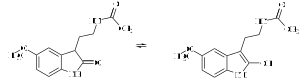
2-Hydroxy Melatonin (Mixture of Tautomeric Isomers)
CAS:Formula:C13H16N2O3Color and Shape:White To Off-White SolidMolecular weight:248.28N-(2-(2-Hydroxy-5-methoxy-1H-indol-3-yl)ethyl)acetamide
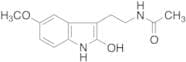
CAS:N-(2-(2-Hydroxy-5-methoxy-1H-indol-3-yl)ethyl)acetamidePurity:95%Molecular weight:248.28g/mol2-Hydroxymelatonin
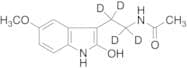
CAS:Formula:C13H16N2O3Color and Shape:Light Yellow To OrangeMolecular weight:248.282-Hydroxymelatonin-d4
CAS:Controlled ProductFormula:C13D4H12N2O3Color and Shape:NeatMolecular weight:252.3022-Hydroxymelatonin
CAS:Melatonin (N-acetyl-5-methoxytryptamine) is a hormone that regulates the sleep and wake cycle. It is produced by the pineal gland in the brain, which synthesizes it from serotonin. Melatonin treatment has been shown to be effective in preventing or reducing the side effects of cancer chemotherapy, including nausea, vomiting, and pain. Melatonin has been shown to have anti-inflammatory and antioxidant properties as well as inhibit enzyme activities, leading to improved mitochondrial function. In addition, melatonin has been shown to protect against oxidative stress through its ability to scavenge free radicals and stimulate antioxidative enzymes such as superoxide dismutase and glutathione peroxidase. Melatonin also enhances apoptosis and can inhibit cell growth in certain types of cancer cells.Formula:C13H16N2O3Purity:Min. 95%Molecular weight:248.28 g/mol