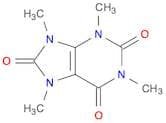
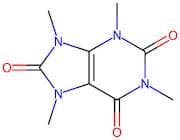
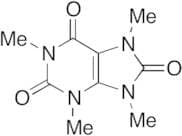
CAS 2309-49-1
:Theacrine
Description:
Theacrine, with the CAS number 2309-49-1, is a naturally occurring alkaloid found in certain plants, particularly in the leaves of the Camellia assamica and in the fruit of the Kucha tea. It is structurally similar to caffeine and belongs to the xanthine class of compounds. Theacrine is known for its stimulant properties, which can enhance energy, focus, and mood without the jittery side effects often associated with caffeine. It is also recognized for its potential to improve physical performance and cognitive function. Theacrine is typically consumed in supplement form and is often marketed for its ability to promote alertness and reduce fatigue. Unlike caffeine, theacrine may have a longer duration of action and a lower likelihood of tolerance development with regular use. Additionally, it has been studied for its potential antioxidant properties and effects on inflammation. Overall, theacrine is gaining popularity in the health and wellness industry for its unique benefits and relatively mild side effects compared to traditional stimulants.
Formula:C9H12N4O3
InChI:InChI=1S/C9H12N4O3/c1-10-5-6(11(2)8(10)15)12(3)9(16)13(4)7(5)14/h1-4H3
InChI key:InChIKey=QGDOQULISIQFHQ-UHFFFAOYSA-N
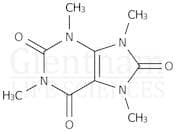
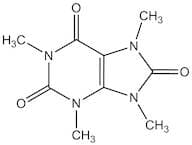
SMILES:CN1C2=C(N(C)C1=O)N(C)C(=O)N(C)C2=O
Synonyms:- 1,3,7,9-Tetramethylpurine-2,6,8-trione
- 1,3,7,9-Tetramethyluric acid
- 1,3,7,9-tetramethyl-7,9-dihydro-1H-purine-2,6,8(3H)-trione
- 1H-Purine-2,6,8(3H)-trione, 7,9-dihydro-1,3,7,9-tetramethyl-
- 7,9-Dihydro-1,3,7,9-tetramethyl-1H-purine-2,6,8(3H)-trione
- Ai3-52596
- Ba 2750
- Nsc 8809
- TeaCrine
- Temorine
- Temurin
- Theacrine
- Uric acid, 1,3,7,9-tetramethyl-
- See more synonyms
Sort by
Purity (%)
0
100
|
0
|
50
|
90
|
95
|
100
Found 8 products.
1H-Purine-2,6,8(3H)-trione, 7,9-dihydro-1,3,7,9-tetramethyl-
CAS:Formula:C9H12N4O3Purity:97%Color and Shape:SolidMolecular weight:224.2166Theacrine
CAS:Formula:C9H12N4O3Purity:≥ 98.0%Color and Shape:White to off-white solidMolecular weight:224.20Tetramethyluric Acid
CAS:Controlled ProductApplications Tetramethyluric acid is an impurity of caffeine. Caffeine is a bitter, white crystalline xanthine alkaloid that acts as a stimulant drug and a reversible acetylcholinesterase inhibitor. Caffeine is found in varying quantities in the seeds, leaves, and fruit of some plants, where it acts as a natural pesticide that paralyzes and kills certain insects feeding on the plants. In humans, caffeine acts as a central nervous system stimulant, temporarily warding off drowsiness and restoring alertness. Caffeine is a cardiac and respiratory stimulant; diuretic. Caffeine is toxic at sufficiently high doses.
References Zubair, U.M., et al.: Anal. Profiles Drug Subs., 15, 71 (1986); Cherrah, Y., et al.: Biochem. Pharmacol., 37, 1311 (1988);Formula:C9H12N4O3Color and Shape:NeatMolecular weight:224.221,3,7,9-Tetramethyl-1H-purine-2,6,8(3H,7H,9H)-trione
CAS:Formula:C9H12N4O3Purity:97%Color and Shape:SolidMolecular weight:224.22