CAS 23173-57-1
:Methylbenzylpiperazine
Description:
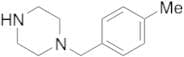
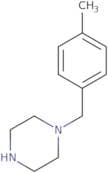
Methylbenzylpiperazine (MBZP) is a chemical compound that belongs to the class of piperazine derivatives. It is characterized by its piperazine ring, which is a six-membered heterocyclic structure containing two nitrogen atoms. The compound features a methyl group and a benzyl group attached to the piperazine, contributing to its unique properties. MBZP is typically a white crystalline solid and is soluble in organic solvents, though its solubility in water is limited. The compound has been studied for its potential psychoactive effects and has been associated with stimulant properties. Its molecular structure allows it to interact with various neurotransmitter systems, which may account for its biological activity. As with many piperazine derivatives, safety and toxicity profiles are important considerations, and research is ongoing to fully understand its pharmacological effects and potential applications. Proper handling and storage are essential due to its chemical nature, and it should be treated with caution in laboratory settings.
Formula:C12H18N2
InChI:InChI=1/C12H18N2/c1-11-2-4-12(5-3-11)10-14-8-6-13-7-9-14/h2-5,13H,6-10H2,1H3
SMILES:Cc1ccc(cc1)CN1CCNCC1
Synonyms:- 1-(4-Methylbenzyl)piperazine
- 1-(4-Methylbenzylpiperazine
Sort by
Purity (%)
0
100
|
0
|
50
|
90
|
95
|
100
Found 3 products.
Piperazine,1-[(4-methylphenyl)methyl]-
CAS:Formula:C12H18N2Purity:95%Color and Shape:SolidMolecular weight:190.28471-(4-Methylbenzyl)piperazine
CAS:Controlled ProductFormula:C12H18N2Color and Shape:NeatMolecular weight:190.2851-(4-Methylbenzyl)piperazine
CAS:Controlled Product1-(4-Methylbenzyl)piperazine is a synthetic compound that has been shown to have inhibitory activities on the d4 receptors. It has also been shown to circumvent the effects of amines and organometallic compounds, such as inhibitors of cholinesterase. 1-(4-Methylbenzyl)piperazine is synthesized through an asymmetric synthesis that involves a piperazine. This synthetic compound can be used in analytical toxicology for the identification of amines and organometallic compounds. The liquid chromatograph/spectrometer (LC/MS) technique is often used for this purpose.Formula:C12H18N2Purity:Min. 95%Molecular weight:190.28 g/mol
![Piperazine,1-[(4-methylphenyl)methyl]-](/_next/image/?url=https%3A%2Fstatic.cymitquimica.com%2Fproducts%2FIN%2Fthumb%2FDA007OOB.jpg&w=3840&q=75)