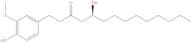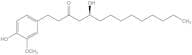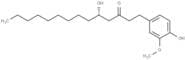
CAS 23513-15-7
:10-Gingerol
Description:
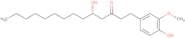
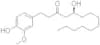
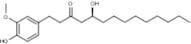
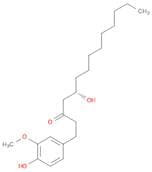
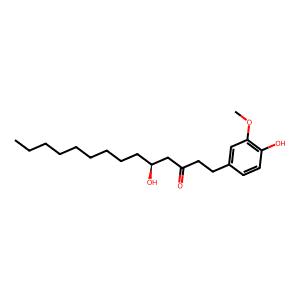
10-Gingerol is a bioactive compound primarily found in ginger (Zingiber officinale), known for its potential health benefits and distinctive flavor profile. It is classified as a phenolic compound and is characterized by its long carbon chain, which contributes to its unique properties. The molecular structure of 10-gingerol includes a hydroxyl group, which enhances its antioxidant activity. This compound is recognized for its anti-inflammatory, analgesic, and anti-cancer properties, making it a subject of interest in nutritional and medicinal research. Additionally, 10-gingerol exhibits a pungent taste, which is a hallmark of ginger, and is often responsible for the spice's characteristic warmth. Its solubility in organic solvents and limited solubility in water are notable physical properties. The compound is also studied for its potential effects on gastrointestinal health and metabolic processes. Overall, 10-gingerol is a significant phytochemical with various applications in food, health, and wellness industries.
Formula:C21H34O4
InChI:InChI=1/C21H34O4/c1-3-4-5-6-7-8-9-10-18(22)16-19(23)13-11-17-12-14-20(24)21(15-17)25-2/h12,14-15,18,22,24H,3-11,13,16H2,1-2H3/t18-/m0/s1
InChI key:InChIKey=AIULWNKTYPZYAN-SFHVURJKSA-N
SMILES:C(CC(C[C@H](CCCCCCCCC)O)=O)C1=CC(OC)=C(O)C=C1
Synonyms:- (+)-(S)-[10]-Gingerol
- (5S)-5-Hydroxy-1-(4-hydroxy-3-methoxyphenyl)-3-tetradecanone
- (5S)-5-hydroxy-1-(4-hydroxy-3-methoxyphenyl)tetradecan-3-one
- (5S)-[10]-Gingerol
- (S)-5-Hydroxy-1-(4-hydroxy-3-methoxyphenyl)-3-tetradecanone
- 3-Tetradecanone, 5-hydroxy-1-(4-hydroxy-3-methoxyphenyl)-, (5S)-
- 3-Tetradecanone, 5-hydroxy-1-(4-hydroxy-3-methoxyphenyl)-, (S)-
- [10]-Gingerol
- (S)-5-hydroxy-1-(4-hydroxy-3-Methoxyphenyl)tetradecan-3-one
- (S)-12-Oxo-14-(3-methoxy-4-hydroxyphenyl)tetradecane-10-ol
- 10]-Gingerol >=95% (HPLC)
- [10]-Gingerol Standard
- (5S)-5-hydroxy-1-(4-hydroxy-3-methoxy-phenyl)tetradecan-3-one
- 10-GINGEROL, HPLC 98%
- 5-hydroxy-1-(4-hydroxy-3-Methoxyphenyl)tetradecan-3-one
- 10-Gingerol ,98%
- (S)-1-(3-Methoxy-4-hydroxyphenyl)-5-hydroxytetradecane-3-one
- 10-Gingerol USP/EP/BP
- GINGEROL, 10-
- (5S)-1-(3-Methoxy-4-hydroxyphenyl)-5-hydroxytetradecane-3-one
- 5-HYDROXY-1-(4-HYDROXY-3-METHOXYPHENYL)-3-TETRADECANONE
- See more synonyms
Sort by
Purity (%)
0
100
|
0
|
50
|
90
|
95
|
100
Found 13 products.
10-Gingerol
CAS:10-Gingerol analytical standard provided with w/w absolute assay, to be used for quantitative titration.Formula:C21H34O4Purity:(HPLC) ≥98%Color and Shape:PasteMolecular weight:350.53-Tetradecanone, 5-hydroxy-1-(4-hydroxy-3-methoxyphenyl)-, (5S)-
CAS:Formula:C21H34O4Purity:98%Color and Shape:SolidMolecular weight:350.4923(S)-5-Hydroxy-1-(4-Hydroxy-3-Methoxyphenyl)Tetradecan-3-One
CAS:(S)-5-Hydroxy-1-(4-Hydroxy-3-Methoxyphenyl)Tetradecan-3-OnePurity:98%Molecular weight:350.49g/mol[10]-Gingerol
CAS:Formula:C21H34O4Purity:≥ 98.0%Color and Shape:Off-white to pale yellow or pale brown powder or solidMolecular weight:350.4910-Gingerol
CAS:10-Gingerol, fresh ginger extract, inhibits the production of nitric oxide, IL-1β, IL-6 and TNF-α as well as their mRNA levels in LPS-activated BV2 microglia,exhibits a significant anti-neuroinflammatory capacity.Formula:C21H34O4Purity:95%~99%Color and Shape:PowderMolecular weight:350.49910-gingerol
CAS:Ketone with other oxygen functionsFormula:C21H34O4Purity:≥ 95.0 % (HPLC)Color and Shape:Solid - waxy (upon heating)Molecular weight:350.510-Gingerol
CAS:10-Gingerol triggers apoptosis via phosphorylation of MAPKs—p38, JNK, ERK.Formula:C21H34O4Purity:99.17% - 99.61%Color and Shape:Yellow-Brown Fine PowderMolecular weight:350.493-Tetradecanone, 5-hydroxy-1-(4-hydroxy-3-methoxyphenyl)-, (5S)-
CAS:Purity:98%Molecular weight:350.498992910-Gingerol
CAS:10-Gingerol is a bioactive compound, which is a phenolic chemical constituent, primarily derived from the rhizome of the ginger plant (Zingiber officinale). This compound is a type of gingerol, which forms the major pungent principle in ginger. 10-Gingerol exercises its biological effects through its interaction with various molecular targets, leading to the modulation of signaling pathways associated with inflammation and oxidative stress. It interacts with receptors and enzymes, which contributes to its ability to inhibit pro-inflammatory mediators and reduce oxidative damage at the cellular level.
Formula:C21H34O4Purity:Min. 95%Color and Shape:White To Off-White SolidMolecular weight:350.24571



![[10]-Gingerol](/_next/image/?url=https%3A%2Fstatic.cymitquimica.com%2Fproducts%2F7W%2Fthumb%2FGL0840.jpg&w=3840&q=75)