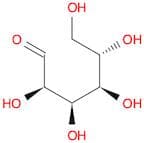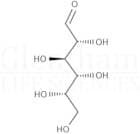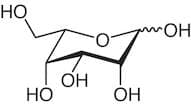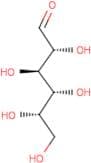
CAS 23567-25-1
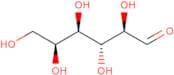
:L-Talose
- <span class="text-smallcaps">L</span>-Talose
- Talose, <span class="text-smallcaps">L</span>-
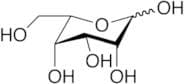
- alpha-L-talopyranose
- beta-L-talopyranose
- Talose, L-
- L-Talose
L-(-)-Talose
CAS:Formula:C6H12O6Purity:>98.0%(HPLC)Color and Shape:White to Almost white powder to crystalMolecular weight:180.16L-Talose
CAS:L-Talose is a type of sugar that is found in plants and animals. It is a stereoselective, synthetic carbohydrate with the chemical formula C12H24O11. L-Talose has an anhydrous dextrose equivalent (DE) of 180. L-Talose is synthesized from D-glucal and D-talonol by a recombinant protein. The immobilization process has been shown to be successful for the production of L-talose as it prevents the loss of product due to adsorption on the surface of the reactor. Molecular modeling was used to determine that L-talose binds to carbonyl groups more strongly than other types of molecules. Anhydrous dextrose was shown to be an effective acceptor for L-talose because it reacts with hydroxyl groups at room temperature and pressure conditions. The nmr spectra show that the hydroxyl group interacts with hydrogen bonding and coordinate covalent bonding
Formula:C6H12O6Purity:Min. 95%Color and Shape:PowderMolecular weight:180.16 g/molL-Talose
CAS:Controlled ProductApplications L-Talose is a novel substrate of ribose-5-phosphate as well as glucose-6-phosphate isomerases that can be converted into L-tagatose.
References Yeom, S. et al.: Appl. Environ. Microbiol., 79, 982 (2013); Yoon, R. et al.: J. Biotechnol., 139, 26 (2009);Formula:C6H12O6Color and Shape:NeatMolecular weight:180.16