CAS 23645-15-0
:H-Glu-Glu-βNA
Description:
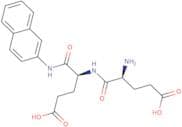
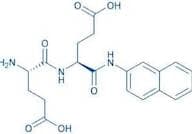
H-Glu-Glu-βNA, also known as H-Glu-Glu-β-naphthylamide, is a synthetic peptide derivative characterized by its structure, which includes two glutamic acid (Glu) residues linked to a β-naphthylamide moiety. This compound is often utilized in biochemical research, particularly in studies involving peptide synthesis and enzyme activity assays. Its unique structure allows it to interact with various biological systems, making it a valuable tool in pharmacological and biochemical applications. The presence of the β-naphthylamide group enhances its hydrophobic properties, which can influence its solubility and interaction with biological membranes. Additionally, the peptide bond formation between the amino acids contributes to its stability and potential bioactivity. H-Glu-Glu-βNA may also serve as a substrate or inhibitor for specific enzymes, providing insights into enzyme kinetics and mechanisms. As with many synthetic peptides, its handling requires careful consideration of stability and storage conditions to maintain its integrity for experimental use.
Formula:C20H23N3O6
Synonyms:- H-Glu-Glu-βNA
- H-Glu-Glu-bNA
- L-α-Glutamine, L-α-glutamyl-N-2-naphthalenyl- (9CI)
Sort by
Purity (%)
0
100
|
0
|
50
|
90
|
95
|
100
Found 2 products.
H-Glu-Glu-bNA
CAS:H-Glu-Glu-bNA is a dipeptide with the amino acid sequence H-Glu-Glu. It has a carboxy group, which can react with 2-naphthylamine to form a chromogenic product. This peptide also contains an amine group that can be reacted with l-glutamyl-l-glutamic acid to form a carboxylic acid. The c-terminal of this peptide can react with an amino group from another dipeptide to form a condensation product.Formula:C20H23N3O6Purity:Min. 95%Molecular weight:401.41 g/molH-Glu-Glu-βNA
CAS:Bachem ID: 4003953.
Formula:C20H23N3O6Purity:≥ 98%Color and Shape:White PowderMolecular weight:401.42