CAS 23680-40-2
:methyl 3-bromoprop-2-ynoate
Description:
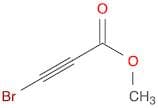
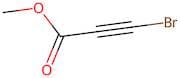
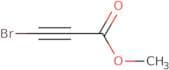
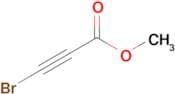
Methyl 3-bromoprop-2-ynoate is an organic compound characterized by its alkyne functional group and a bromine atom attached to a propynoate structure. It features a methyl ester group, which contributes to its reactivity and solubility in organic solvents. The presence of the triple bond in the prop-2-ynoate portion of the molecule imparts unique chemical properties, making it a useful intermediate in organic synthesis, particularly in the formation of carbon-carbon bonds. The bromine atom serves as a good leaving group, facilitating nucleophilic substitution reactions. Methyl 3-bromoprop-2-ynoate is typically a colorless to pale yellow liquid with a distinct odor, and it is sensitive to moisture and light. It is important to handle this compound with care due to its potential reactivity and the presence of bromine, which can pose health hazards. In laboratory settings, it is often utilized in the synthesis of more complex organic molecules, including pharmaceuticals and agrochemicals.
Formula:C4H3BrO2
InChI:InChI=1/C4H3BrO2/c1-7-4(6)2-3-5/h1H3
SMILES:COC(=O)C#CBr
Synonyms:- 2-Propynoic acid, 3-bromo-, methyl ester
- Methyl 3-bromo-2-propynoate
- Propiolic acid, bromo-, methyl ester
Sort by
Purity (%)
0
100
|
0
|
50
|
90
|
95
|
100
Found 4 products.
2-Propynoic acid, 3-bromo-, methyl ester
CAS:Formula:C4H3BrO2Purity:95%Color and Shape:SolidMolecular weight:162.9694Methyl 3-bromopropiolate
CAS:Methyl 3-bromopropiolate is an acetylcholine esterase inhibitor. It is a broad spectrum, reversible inhibitor of acetylcholine esterase and has been shown to have biological properties that are similar to those of curare. Methyl 3-bromopropiolate is used as a control agent in experiments on the effects of acetylcholine and other neurotransmitters. It also has antimicrobial activity against gram-positive bacteria such as Staphylococcus aureus and Enterococcus faecalis. In addition, methyl 3-bromopropiolate reacts with halides to form reactive intermediates that can cross-link DNA strands, which may be important for its efficient asymmetric synthesis. Methyl 3-bromopropiolate is synthesized by reacting an amide with methyl bromoacetate. This reaction generates an asymmetric product in high yield due to the use of a chiralFormula:C4H3BrO2Purity:Min. 95%Color and Shape:Colourless To Pale Yellow LiquidMolecular weight:162.97 g/mol