CAS 2369979-68-8
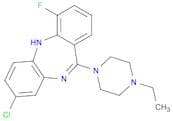
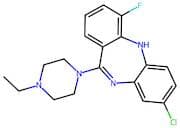
:5H-Dibenzo[b,e][1,4]diazepine, 8-chloro-11-(4-ethyl-1-piperazinyl)-4-fluoro-
Description:
5H-Dibenzo[b,e][1,4]diazepine, 8-chloro-11-(4-ethyl-1-piperazinyl)-4-fluoro- is a synthetic chemical compound characterized by its complex bicyclic structure, which includes a diazepine core fused with two benzene rings. This compound features a chlorine atom at the 8-position and a fluorine atom at the 4-position, contributing to its unique reactivity and potential biological activity. The presence of a piperazine moiety at the 11-position enhances its pharmacological properties, making it of interest in medicinal chemistry, particularly in the development of psychoactive or therapeutic agents. The compound's molecular structure suggests it may interact with various biological targets, potentially influencing neurotransmitter systems. Its specific characteristics, such as solubility, stability, and reactivity, would depend on the surrounding conditions and the presence of other functional groups. As with many synthetic compounds, safety and handling precautions are essential due to potential toxicity or environmental impact. Further studies would be necessary to fully elucidate its properties and applications in various fields.
Formula:C19H20ClFN4
Synonyms:- 5H-Dibenzo[b,e][1,4]diazepine, 8-chloro-11-(4-ethyl-1-piperazinyl)-4-fluoro-
- 8-chloro-11-(4-ethyl-1-piperazinyl)-4-fluoro-5H-Dibenzo[b,e][1,4]diazepine
Sort by
Purity (%)
0
100
|
0
|
50
|
90
|
95
|
100
Found 4 products.
JHU37160
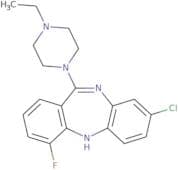
CAS:JHU37160 is a DREADD agonist with Ki of 1.9 nM for hM3Dq, 3.6 nM for hM4Di, and EC50 of 18.5 nM (hM3Dq), 0.2 nM (hM4Di) in HEK-293 cell assays.Formula:C19H20ClFN4Purity:99.87%Color and Shape:SolidMolecular weight:358.84JHU37160
CAS:JHU37160 is an inhibitor that has been shown to induce apoptosis in cancer cells. This analog of caffeine and oxytocin has been found to inhibit the activity of a kinase that is involved in tumor growth and progression. JHU37160 has potent anticancer activity against human cancer cell lines, making it a promising candidate for cancer therapy. This inhibitor has been isolated from Chinese urine and has been extensively studied for its ability to inhibit protein activity. Its unique mechanism of action makes it a valuable tool for cancer research and drug development.Formula:C19H20ClFN4Purity:Min. 95%Molecular weight:358.8 g/mol