CAS 23981-25-1
:8-Chloro-2-hydroxyquinoline
Description:
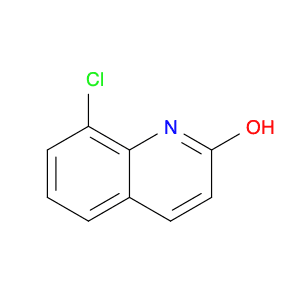
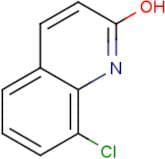
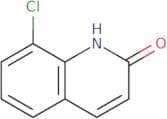
8-Chloro-2-hydroxyquinoline is an organic compound characterized by its quinoline structure, which consists of a fused benzene and pyridine ring. The presence of a chlorine atom at the 8-position and a hydroxyl group at the 2-position contributes to its unique chemical properties. This compound is typically a pale yellow solid and is known for its potential applications in various fields, including pharmaceuticals and agrochemicals. It exhibits properties such as antimicrobial and antifungal activity, making it of interest in medicinal chemistry. The hydroxyl group can participate in hydrogen bonding, influencing its solubility and reactivity. Additionally, the chlorine substituent can affect the compound's electronic properties, potentially enhancing its biological activity. As with many quinoline derivatives, 8-chloro-2-hydroxyquinoline may also exhibit fluorescence, which can be useful in analytical applications. Safety and handling precautions are essential, as with any chemical substance, due to potential toxicity and environmental impact.
- 2-Quinolinol, 8-Chloro-
- 8-Chloroquinolin-2-ol
Sort by
Purity (%)
0
100
|
0
|
50
|
90
|
95
|
100
Found 4 products.
8-Chloro-2-hydroxyquinoline
CAS:Formula:C9H6ClNOPurity:97%Color and Shape:SolidMolecular weight:179.60308-Chloroquinolin-2-ol
CAS:8-Chloroquinolin-2-ol is an activated compound that exhibits cytotoxic properties. It has been used in the development of nanocomposites with potassium channels, which have shown promising results in various research studies. 8-Chloroquinolin-2-ol can be synthesized by reacting quinolin-8-ol with pentafluoropropionic anhydride and potassium carbonate. This compound is commonly used as a research chemical and is often employed for the production of antibodies or as a potassium ion inhibitor. Its reactive nature makes it suitable for various applications, including the development of steroid-based nanotubes or the synthesis of inhibitors for specific reactions. When working with 8-Chloroquinolin-2-ol, it is important to handle it in anhydrous sodium carbonate to ensure its stability and effectiveness.Formula:C9H6ClNOPurity:Min. 95%Molecular weight:179.61 g/mol