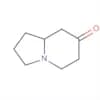
CAS 2407-99-0
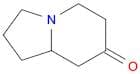
:7(1H)-Indolizinone, hexahydro-
Description:
7(1H)-Indolizinone, hexahydro- is a chemical compound characterized by its bicyclic structure, which includes an indolizinone moiety. This compound typically exhibits a fused ring system that contributes to its unique chemical properties. It is a colorless to pale yellow solid at room temperature and is generally soluble in organic solvents. The presence of nitrogen in its structure can influence its reactivity and potential biological activity, making it of interest in medicinal chemistry. The compound may participate in various chemical reactions, including electrophilic substitutions and nucleophilic attacks, due to the electron-rich nature of the indolizinone ring. Its derivatives may exhibit diverse pharmacological activities, which can be explored for potential therapeutic applications. As with many organic compounds, safety and handling precautions should be observed, as it may pose health risks if ingested or inhaled. Overall, 7(1H)-Indolizinone, hexahydro- represents a class of compounds that can be valuable in research and development within the fields of organic and medicinal chemistry.
Formula:C8H13NO
Sort by
Purity (%)
0
100
|
0
|
50
|
90
|
95
|
100
Found 5 products.
hexahydro-7(1H)-Indolizinone
CAS:Formula:C8H13NOPurity:95%Color and Shape:LiquidMolecular weight:139.19495,6-Dihydro-8H-indolizin-7-one
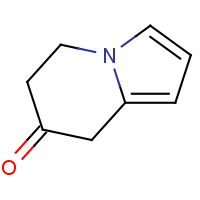
CAS:5,6-Dihydro-8H-indolizin-7-onePurity:≥95%Molecular weight:135.16g/molHexahydro-indolizin-7-one Hydrochloride
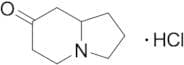
CAS:Controlled ProductFormula:C8H13NO·HClColor and Shape:NeatMolecular weight:175.65Octahydroindolizin-7-one
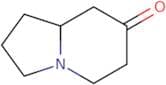
CAS:Octahydroindolizin-7-one is a heterocyclic compound that has been isolated from the fungus Ganoderma lucidum and the bacterium Streptomyces griseus. It has an enamine structure, which can be converted to an amine by reduction with lithium aluminum hydride. Octahydroindolizin-7-one has been shown to inhibit bacterial growth through the inhibition of protein synthesis.
Formula:C8H13NOPurity:Min. 95%Molecular weight:139.19 g/mol