CAS 2412-58-0
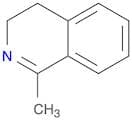
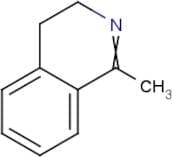
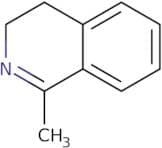
:1-methyl-3,4-dihydroisoquinoline
Description:
1-Methyl-3,4-dihydroisoquinoline is an organic compound belonging to the isoquinoline family, characterized by its bicyclic structure that includes a fused benzene and a pyridine ring. This compound features a methyl group attached to the nitrogen atom of the isoquinoline framework, which influences its chemical properties and reactivity. It is typically a colorless to pale yellow liquid or solid, depending on its purity and form. The compound is known for its potential biological activities, including effects on the central nervous system, making it of interest in medicinal chemistry. Its molecular structure allows for various functional group modifications, which can enhance its pharmacological properties. Additionally, 1-methyl-3,4-dihydroisoquinoline can participate in various chemical reactions, such as oxidation and substitution, making it a versatile intermediate in organic synthesis. Safety data indicates that, like many organic compounds, it should be handled with care, as it may pose health risks if ingested or inhaled.
Formula:C10H11N
InChI:InChI=1/C10H11N/c1-8-10-5-3-2-4-9(10)6-7-11-8/h2-5H,6-7H2,1H3
SMILES:CC1=NCCc2ccccc12
Sort by
Purity (%)
0
100
|
0
|
50
|
90
|
95
|
100
Found 4 products.
1-Methyl-3,4-dihydroisoquinoline
CAS:<p>1-Methyl-3,4-dihydroisoquinoline</p>Formula:C10H11NPurity:98+%Color and Shape: brown liquidMolecular weight:145.20g/mol1-Methyl-3,4-dihydroisoquinoline
CAS:Formula:C10H11NPurity:95%Color and Shape:LiquidMolecular weight:145.2051-Methyl-3,4-dihydroisoquinoline
CAS:<p>1-Methyl-3,4-dihydroisoquinoline is a chemical compound that is used in the synthesis of 1-methyl-3,4-dihydroisoquinoline N-oxide. 1,2-Dihydroisoquinolines are amine derivatives that are important for their physiological properties. The asymmetric synthesis of 1,2-dihydroisoquinolines is important for the development of new drugs and pharmaceuticals. This reaction scheme includes two steps: the first step involves the condensation of an imine with a catecholamine to form an imine; the second step involves cyclization of this imine to form a 1,2 dihydroisoquinoline. The use of additives such as sodium methoxide or dimethylsulfate can increase selectivity and yield by stabilizing one enantiomer over another. The products from this reaction are methylated with methyl iodide in the presence of potassium</p>Formula:C10H11NPurity:Min. 95%Molecular weight:145.2 g/mol