CAS 2420-26-0
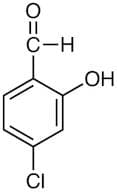
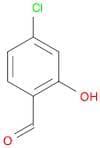
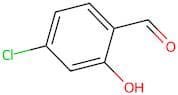
:4-Chloro-2-hydroxybenzaldehyde
Description:
4-Chloro-2-hydroxybenzaldehyde, also known as salicylaldehyde chloride, is an organic compound characterized by the presence of both a hydroxyl group (-OH) and an aldehyde group (-CHO) on a benzene ring, with a chlorine atom substituted at the para position relative to the hydroxyl group. Its molecular formula is C7H6ClO2, and it typically appears as a pale yellow to light brown liquid or solid, depending on its purity and form. This compound is known for its aromatic properties and is often used in organic synthesis, particularly in the preparation of various pharmaceuticals and agrochemicals. It exhibits moderate solubility in polar solvents like ethanol and water, while being less soluble in non-polar solvents. The presence of the chlorine atom enhances its reactivity, making it a useful intermediate in chemical reactions, such as electrophilic aromatic substitution. Additionally, 4-chloro-2-hydroxybenzaldehyde can participate in various chemical transformations, including condensation reactions and the formation of derivatives, which are valuable in synthetic organic chemistry.
Formula:C7H5ClO2
InChI:InChI=1/C7H5ClO2/c8-6-2-1-5(4-9)7(10)3-6/h1-4,10H
SMILES:c1cc(cc(c1C=O)O)Cl
Synonyms:- Benzaldehyde, 4-chloro-2-hydroxy-
- 4-Chlorosalicylaldehyde
Sort by
Purity (%)
0
100
|
0
|
50
|
90
|
95
|
100
Found 5 products.
4-Chlorosalicylaldehyde
CAS:Formula:C7H5ClO2Purity:>95.0%(GC)(T)Color and Shape:White to Light yellow to Light orange powder to crystalMolecular weight:156.574-Chloro-2-hydroxybenzaldehyde
CAS:Formula:C7H5ClO2Purity:97%Color and Shape:SolidMolecular weight:156.56644-Chloro-2-hydroxybenzaldehyde
CAS:4-Chloro-2-hydroxybenzaldehydeFormula:C7H5ClO2Purity:≥95%Color and Shape: pale yellow solidMolecular weight:156.57g/mol4-Chloro-2-hydroxy-benzaldehyde
CAS:Formula:C7H5ClO2Purity:95%Color and Shape:SolidMolecular weight:156.574-Chloro-2-hydroxybenzaldehyde
CAS:4-Chloro-2-hydroxybenzaldehyde is a fluorescent probe that has been shown to bind to the mitochondrial membrane potential in human liver cells. It is also able to detect cancer cells and can be used for diagnosis of this disease. 4-Chloro-2-hydroxybenzaldehyde's fluorescence emission spectrum can be used as an indicator of the mitochondrial membrane potential, which can be useful in studying cancer cells. The hydrogen bond present between 4-chloro-2-hydroxybenzaldehyde and hydrochloric acid can be detected by measuring the uv absorption at 240 nm. This compound also has biological properties that make it useful for diagnosis of hepatitis and other diseases.
Formula:C7H5ClO2Purity:Min. 95%Color and Shape:PowderMolecular weight:156.57 g/mol