CAS 2423-66-7
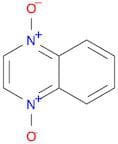
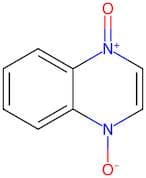
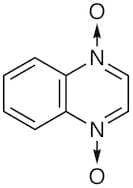
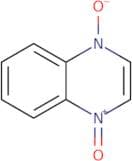
:Quinoxaline dioxide
- 1-oxoquinoxalin-1-ium-4(1H)-olate
- BAY-Va 9391
- Bayo N-Ox
- Ccris 1570
- Celbar
- Chindoxin
- Chindoxin [Czech]
- Chinoxalin-1,4-dioxid
- Chinoxalin-1,4-dioxid [Czech]
- Grofas
- Ici 8173
- Nsc 193508
- Nsc 21653
- Quindoxin [INN:BAN]
- Quindoxina
- Quindoxina [INN-Spanish]
- Quindoxine
- Quindoxine [INN-French]
- Quindoxinum
- Quindoxinum [INN-Latin]
- Quinoxaline 1,4-di-N-oxide
- Quinoxaline 1,4-dioxide
- Quinoxaline N,N-dioxide
- Quinoxaline di-N-oxide
- Quinoxaline dioxide
- Unii-Amx8J6Ys1H
- Usaf H-1
- Quindoxin
- See more synonyms
Quinoxaline 1,4-Dioxide
CAS:Formula:C8H6N2O2Purity:>95.0%(T)(HPLC)Color and Shape:Light yellow to Yellow powder to crystalMolecular weight:162.15Quinoxaline-1,4-diium-1,4-bis(olate)
CAS:Quinoxaline-1,4-diium-1,4-bis(olate) is a genotoxic agent that has been shown to cause DNA damage and mutations. In vitro assays have shown that this substance is reactive with human serum in a photochemical reaction, which generates malonic acid and oxidative DNA. It also inhibits bacterial growth by binding to the bacterial 16S ribosomal RNA molecule, thereby inhibiting protein synthesis. This substance has been shown to be active against solid tumours in vivo. The structure of quinoxaline-1,4-diium-1,4-bis(olate) contains a chlorine atom at position 1 and 4 of the aromatic ring system. This chlorine atom can be displaced by an n-oxide group or reduced to form a quinone methide species. These reactions are thought to be responsible for the biological properties of this compound.
Formula:C8H6N2O2Purity:Min. 95%Molecular weight:162.15 g/mol