CAS 24287-95-4
:2-Bromo-3-thiophenecarboxylic acid
Description:
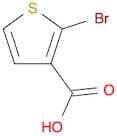
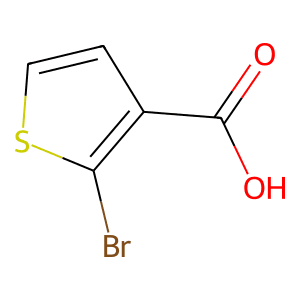
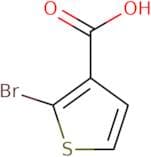
2-Bromo-3-thiophenecarboxylic acid is an organic compound characterized by the presence of a bromine atom and a thiophene ring in its structure. It features a carboxylic acid functional group, which contributes to its acidic properties. The bromine substituent is located at the second position of the thiophene ring, while the carboxylic acid group is attached at the third position, influencing the compound's reactivity and solubility. This compound is typically a solid at room temperature and may exhibit moderate solubility in polar solvents due to the presence of the carboxylic acid group. Its unique structure allows it to participate in various chemical reactions, making it useful in synthetic organic chemistry, particularly in the development of pharmaceuticals and agrochemicals. Additionally, the presence of the thiophene ring can impart interesting electronic properties, which may be exploited in materials science and organic electronics. Safety data should be consulted for handling, as with all chemical substances, to ensure proper precautions are taken.
Formula:C5H3BrO2S
InChI:InChI=1S/C5H3BrO2S/c6-4-3(5(7)8)1-2-9-4/h1-2H,(H,7,8)
InChI key:InChIKey=RVSXMPCELBYUSF-UHFFFAOYSA-N
SMILES:C(O)(=O)C1=C(Br)SC=C1
Synonyms:- 2-Bromo-3-thiophenecarboxylic acid
- 3-Thiophenecarboxylic acid, 2-bromo-
- Thiophene-2-bromo-3-carboxylic acid
- 2-Bromothiophene-3-carboxylic acid
Sort by
Purity (%)
0
100
|
0
|
50
|
90
|
95
|
100
Found 4 products.
2-Bromo-3-thiophenecarboxylic acid
CAS:Formula:C5H3BrO2SPurity:97%Color and Shape:SolidMolecular weight:207.04512-Bromothiophene-3-carboxylic acid
CAS:2-Bromothiophene-3-carboxylic acidFormula:C5H3BrO2SPurity:95%Color and Shape: grey to very dark brown solidMolecular weight:207.05g/mol2-Bromo-3-thiophenecarboxylic acid
CAS:Formula:C5H3BrO2SPurity:95%Color and Shape:SolidMolecular weight:207.042-Bromo-3-thiophenecarboxylic acid
CAS:2-Bromo-3-thiophenecarboxylic acid (BTPC) is a synthetic drug that is used as an analog of sildenafil, which is a PDE5 inhibitor. BTPC has been shown to be a more potent and selective inhibitor of cGMP hydrolysis than sildenafil. It has also been shown to be capable of inhibiting the growth of human lung cancer cells in vitro. BTPC has not yet been tested in vivo, but may offer advantages over other PDE5 inhibitors due to its increased potency and selectivity.Formula:C5H3BrO2SPurity:Min. 97 Area-%Color and Shape:PowderMolecular weight:207.05 g/mol