CAS 2439-77-2
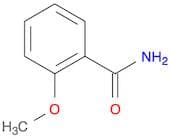
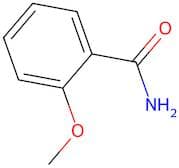
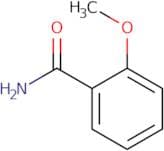
:2-Methoxybenzamide
Description:
2-Methoxybenzamide, with the CAS number 2439-77-2, is an organic compound characterized by the presence of a methoxy group (-OCH₃) and an amide functional group (-C(O)NH₂) attached to a benzene ring. This compound typically appears as a white to off-white solid and is soluble in organic solvents such as ethanol and acetone, but has limited solubility in water due to its hydrophobic aromatic structure. The methoxy group enhances the compound's electron-donating properties, influencing its reactivity and interaction with other chemical species. 2-Methoxybenzamide can be synthesized through various methods, including the reaction of 2-methoxybenzoic acid with ammonia or amines. It is of interest in various fields, including pharmaceuticals and agrochemicals, due to its potential biological activities, such as antimicrobial and anti-inflammatory properties. As with many organic compounds, safety precautions should be observed when handling 2-methoxybenzamide, as it may pose health risks if ingested or inhaled.
Formula:C8H9NO2
InChI:InChI=1S/C8H9NO2/c1-11-7-5-3-2-4-6(7)8(9)10/h2-5H,1H3,(H2,9,10)
InChI key:InChIKey=MNWSGMTUGXNYHJ-UHFFFAOYSA-N
SMILES:O(C)C1=C(C(N)=O)C=CC=C1
Synonyms:- 2-Methoxybenzamide, (o-Anisamide)
- Benzamide, 2-methoxy-
- Benzamide, o-methoxy-
- NSC 84232
- Orthopramide
- o-Anisamide
- o-Methoxybenzamide
- 2-Methoxybenzamide
Sort by
Purity (%)
0
100
|
0
|
50
|
90
|
95
|
100
Found 4 products.
2-Methoxybenzamide
CAS:<p>2-Methoxybenzamide is an amide with a p-hydroxybenzoic acid moiety. It has been shown to be an effective inhibitor of the enzyme histone deacetylase, which is involved in the regulation of gene expression. 2-Methoxybenzamide also has antiinflammatory activity and has minimal toxicity. This drug is used as a research tool for studying the immune system and its effects on hyperproliferative diseases such as cancer and autoimmune diseases. 2-Methoxybenzamide can also be used to treat metabolic disorders and physiological effects. The drug binds to intracellular targets through intermolecular hydrogen bonds that are mainly found in protein structures, including cytochrome P450s, protein kinases, DNA polymerases, transcription factors, and proteases.</p>Formula:C8H9NO2Purity:Min. 95%Color and Shape:PowderMolecular weight:151.16 g/mol