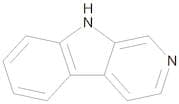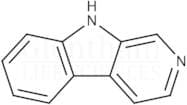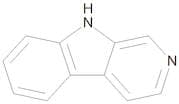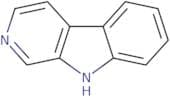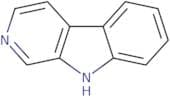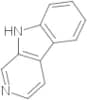
CAS 244-63-3
:β-Carboline
- 2,9-Diazafluorene
- 2-Azacarbazole
- 9H-Pyrido[3,4-B]Indole
- 9H-Pyrido[3,4-b]indol
- 9H-pirido[3,4-b]indol
- Carbazoline
- Norharmane
- Nsc 84417
- β-Carboline
- Norharman
9H-Pyrido[3,4-b]indole
CAS:Purity:95.0%Color and Shape:Solid, White to slightly pale yellow powderMolecular weight:168.199005126953129H-Pyrido[3,4-b]indole
CAS:Formula:C11H8N2Purity:>98.0%(GC)(T)Color and Shape:White to Light yellow to Light orange powder to crystalMolecular weight:168.20Norharmane
CAS:Norharmane (β-Carboline) is a natural β-carboline first isolated from plants of the Zygophyllaceae family.Formula:C11H8N2Purity:95.16% - 99.53%Color and Shape:SolidMolecular weight:168.19Nor Harmane
CAS:Controlled ProductApplications The compund has cytotoxic effects.
References Elfarra, A., et al.: Drug Metab. Dispos., 26, 779 (1998), Da Costa, A., et al.: Biocell, 23, 65 (1999), Janetzky, B., et al.: Drug Dev. Res., 46, 51 (1999), Kutty, R., et al.: Toxicol. Appl. Pharmacol., 107, 377 (1991), Riederer, F., et al.: J. Neurochem., 81, 814 (2002), Schott, Y., et al.: Bioorg. Med. Chem. Lett., 16, 5840 (2006)Formula:C11H8N2Color and Shape:Off-White To Light BrownMolecular weight:168.19Norharman - free base
CAS:Norharman - free base is a chemical compound that is categorized as a β-carboline alkaloid. It occurs naturally in various plant and animal sources, such as tobacco smoke and cooked foods, indicating its broad environmental presence. The compound is synthesized in laboratory settings for precise examination and experimentation.
Purity:Min. 95%Norharman, free base
CAS:Norharmane and Harmane are both members of the class of β-carbolines. They are known to be endogenously formed body constituents, but external sources have also been identified. For example, tobacco smoke and certain processed meat contain small amounts of the compounds (J. Chromatogr. B). Plants containing these alkaloids are originally used in hallucinogenic drinks or snuffs in religious ceremonies particularly in the Amazon basin. The neurological effects of β-carbolines are well characterized at the molecular level. In addition, Norharmane and Harmane show molecular similarity to Parkinson-inducing neurotoxins and as a result these compounds have been studied extensively to identify their connection to idiopathic Parkinson’s disease. Indeed, it has been noted that the concentration of Harmane in the blood seems to be elevated in Parkinson’s disease patients.
Formula:C11H8N2Purity:Min. 98 Area-%Molecular weight:168.20 g/molRef: 4Z-H-154
Discontinued product
![9H-Pyrido[3,4-b]indole](/_next/image/?url=https%3A%2Fstatic.cymitquimica.com%2Fproducts%2FIN%2Fthumb%2FDA0034F8.jpg&w=3840&q=75)


![9H-Pyrido[3,4-b]Indole](/_next/image/?url=https%3A%2Fstatic.cymitquimica.com%2Fproducts%2F54%2Fthumb%2FOR1012173.jpg&w=3840&q=75)
![9H-Pyrido[3,4-b]indole](/_next/image/?url=https%3A%2Fstatic.cymitquimica.com%2Fproducts%2F10%2Fthumb%2FF230515.jpg&w=3840&q=75)

![9H-Pyrido[3,4-b]indole](/_next/image/?url=https%3A%2Fstatic.cymitquimica.com%2Fproducts%2F3B%2Fthumb%2FP1121.jpg&w=3840&q=75)