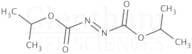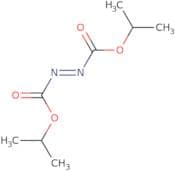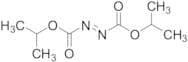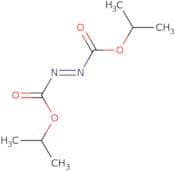
CAS 2446-83-5
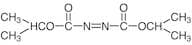
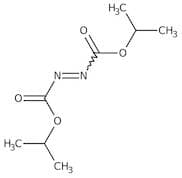
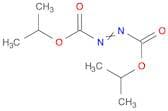
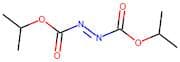
:Diisopropyl azodicarboxylate
- 1,2-Diazenedicarboxylic acid, 1,2-bis(1-methylethyl) ester
- Azodicarbonic Acid Diisopropyl Ester
- Azodicarboxylic Acid Diisopropyl Ester
- DIAD Alternative to DEAD
- DIISOPYL azodicarboxylate
- Diad
- Diazenedicarboxylic acid, bis(1-methylethyl) ester
- Diisopropyl Azodiformate
- Diisopropyl diazene-1,2-dicarboxylate
- Diisopropyl diazodicarboxylate
- Diisopropylazodicarboxylat
- Diisopropylazodicarboxylate
- Dipropan-2-Yl Diazene-1,2-Dicarboxylate
- Formic acid, azodi-, diisopropyl ester
- Labotest-Bb Lt00454155
- bis(1-methylethyl) (E)-diazene-1,2-dicarboxylate
- See more synonyms
Diisopropyl Azodicarboxylate (40% in Toluene, ca. 1.9mol/L)
CAS:Formula:C8H14N2O4Color and Shape:Light yellow to Amber to Dark green clear liquidMolecular weight:202.21Diisopropyl azodicarboxylate, 94%
CAS:Diisopropyl azodicarboxylate is used as an important reagent in the production of many organic compounds. It is used in association with triphenyl phosphine in Mitsunobu reaction of alcohols, acids and amides. It acts as reactant in the preparation of chromenes resembling classical cannabinoids, norFormula:C8H14N2O4Purity:94%Color and Shape:Clear, orange to reddish brown, LiquidMolecular weight:202.21Diisopropyl azodicarboxylate
CAS:Formula:C8H14N2O4Purity:95%Color and Shape:LiquidMolecular weight:202.2078Ref: IN-DA0034QS
5g20.00€1kg72.00€25g20.00€50g24.00€5kg175.00€100g25.00€10kg318.00€250g38.00€25kgTo inquire500g50.00€Bis(isopropyl) azodicarboxylate
CAS:Bis(isopropyl) azodicarboxylateFormula:C8H14N2O4Purity:98%Color and Shape: clear. dark orange liquidMolecular weight:202.20776g/molDiisopropyl azodicarboxylate
CAS:Formula:C8H14N2O4Purity:≥ 98.0%Color and Shape:Clear, orange to red-orange liquidMolecular weight:202.21Diisopropyl azodicarboxylate
CAS:Formula:C8H14N2O4Purity:99.0%Color and Shape:Liquid, Clear LiquidMolecular weight:202.21Diisopropyl azodicarboxylate
CAS:Diisopropyl azodicarboxylate is a pyrimidine compound that can be used in the treatment of autoimmune diseases and eye disorders. It is also an important chemical intermediate for pharmaceuticals, such as chemotherapeutic agents. Diisopropyl azodicarboxylate reacts with a nucleophilic group to form a new carbon-nitrogen bond by elimination of nitrogen gas. The reaction mechanism has been studied extensively and is well understood. Diisopropyl azodicarboxylate is a potent inhibitor of many enzymes, including those involved in the synthesis of proteins and phospholipids. It inhibits angiotensin-converting enzyme (ACE), which breaks down angiotensin I into angiotensin II, leading to vasoconstriction. Diisopropyl azodicarboxylate also inhibits receptor molecules that are involved in cell signaling pathways, such as the epidermal growth factor receptor (EGFR).Formula:C8H14N2O4Purity:Min. 98 Area-%Color and Shape:Clear LiquidMolecular weight:202.21 g/molDiisopropyl Azodicarboxylate
CAS:Controlled ProductApplications Diisopropyl Azodicarboxylate is an azodicarboxylic acid derivative used as a reagent in the production of many organic compounds. Diisopropyl Azodicarboxylate is commonly used as an oxidizer in Mitsunobu reactions and can also serve as a selective deprotectant of N-benzyl groups in the presence of other protecting groups.
References Pichika, R. et al.: Nuc. Med. Biol., 38, 1183 (2011); Kroutil, J. et al.: Synthesis, 3, 446 (2004); Hughes, D.L. et al.: Org. React., 42, 335 (1992);Formula:C8H14N2O4Color and Shape:NeatMolecular weight:202.21Diisopropyl azodicarboxylate - 40% toluene solution
CAS:Diisopropyl azodicarboxylate is a chemical compound that reacts with hydrogen fluoride to form a mixture of diazo and triazole products. The chemical reaction is the first step in the synthesis of many pharmaceuticals, such as penicillin. Diisopropyl azodicarboxylate is used in eye disorders, metabolic disorders, and autoimmune diseases. It has been shown to be effective in treating bowel disease. This drug has been shown to have chemotherapeutic properties, which may be due to its ability to inhibit protein synthesis by binding to the nitrogen atoms on receptor molecules. Diisopropyl azodicarboxylate also reacts with trifluoroacetic acid, forming a disulfide bond that can be analyzed using structural analysis techniques or reaction solution methods.
Formula:C8H14N2O4Purity:Min. 95%Color and Shape:Yellow To Yellow Orange LiquidMolecular weight:202.21 g/molRef: 3D-FD166028
Discontinued product