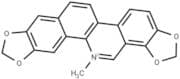
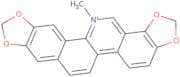
CAS 2447-54-3
:Sanguinarine
Description:
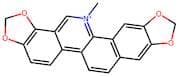
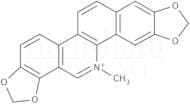
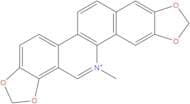
Sanguinarine is a benzophenanthridine alkaloid primarily derived from the plant Sanguinaria canadensis, commonly known as bloodroot. It is characterized by its yellow to orange crystalline appearance and has a molecular formula of C20H17NO4. Sanguinarine exhibits a range of biological activities, including antimicrobial, anti-inflammatory, and potential anticancer properties, making it of interest in both medicinal and agricultural applications. The compound functions by interacting with various cellular pathways, influencing processes such as apoptosis and cell proliferation. Sanguinarine is also known for its ability to inhibit certain enzymes and has been studied for its effects on oral health, particularly in relation to periodontal disease. However, it is important to note that while sanguinarine has therapeutic potential, it can also exhibit cytotoxic effects at higher concentrations. As with many natural compounds, further research is necessary to fully understand its mechanisms of action and potential applications in medicine and industry.
Formula:C20H14NO4
InChI:InChI=1S/C20H14NO4/c1-21-8-15-12(4-5-16-20(15)25-10-22-16)13-3-2-11-6-17-18(24-9-23-17)7-14(11)19(13)21/h2-8H,9-10H2,1H3/q+1
InChI key:InChIKey=INVGWHRKADIJHF-UHFFFAOYSA-N
SMILES:C[N+]=1C2=C(C=3C(C1)=C4C(=CC3)OCO4)C=CC=5C2=CC6=C(C5)OCO6
Synonyms:- (1,3)-Benzodioxolo(5,6-c)-1,3-dioxolo(4,5-i)phenanthridinium, 13-methyl-
- 13-Methyl[1,3]Benzodioxolo[5,6-C][1,3]Dioxolo[4,5-I]Phenanthridin-13-Ium
- 13-Methyl[1,3]benzodioxolo[5,6-c]-1,3-dioxolo[4,5-i]phenanthridinium
- Brn 3915507
- Dimethylenedioxy benzphenanthridine
- Pseudochelerythrine
- Sangrovit
- Sanguinarin
- Sanguinarium
- Unii-Av9Vk043Ss
- Sanguinarine
Sort by
Purity (%)
0
100
|
0
|
50
|
90
|
95
|
100
Found 7 products.
[1,3]Benzodioxolo[5,6-c]-1,3-dioxolo[4,5-i]phenanthridinium, 13-methyl-
CAS:Formula:C20H14NO4Purity:97%Color and Shape:SolidMolecular weight:332.3295Sanguinarine
CAS:Formula:C20H14NO4Purity:(HPLC) ≥ 98.0%Color and Shape:Orange powderMolecular weight:332.33Sanguinarine
CAS:Sanguinarine possesses anticancer, antimicrobial, anti-inflammatory, and antioxidant properties, it has therapeutic potential in preventing the neurodegenerative diseases, it may be used to develop a potential therapeutic drug for treating cardiac remodeling and heart failure and shows protective effects on teeth and alveolar bone health. Sanguinarine can inhibit osteoclast formation and bone resorption via suppressing RANKL-induced activation of NF-κB and ERK signaling pathways, and can protect against cardiac hypertrophy and fibrosis via inhibiting NF-κB activation.Formula:C20H14NO4Purity:95%~99%Molecular weight:332.334Sanguinarine Chloride Hydrate
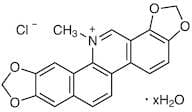
CAS:Formula:C20H14ClNO4·xH2OPurity:>98.0%(HPLC)Color and Shape:Light yellow to Brown powder to crystalMolecular weight:367.79 (as Anhydrous)Sanguinarine
CAS:Sanguinarine (Pseudochelerythrine) is a specific inhibitor of Rac1b with anti-microbial, anti-oxidant and anti-inflammatory properties.Formula:C20H14NO4Purity:99.04% - 99.76%Color and Shape:SolidMolecular weight:332.33Sanguinarine
CAS:Sanguinarine is a benzophenanthridine alkaloid, which is derived from plants such as Sanguinaria canadensis (bloodroot) and certain species of the Papaveraceae family. With its distinctive polycyclic structure, sanguinarine has been extensively studied for its diverse biological activities. It primarily exerts its action by binding to nucleic acids and proteins, leading to the inhibition of various cellular processes. Its mode of action involves intercalating into DNA, disrupting replication and transcription, and altering enzyme activities by forming stable complexes with protein thiol groups.
Formula:C20H14NO4Purity:Min. 95%Color and Shape:PowderMolecular weight:332.33 g/mol
![[1,3]Benzodioxolo[5,6-c]-1,3-dioxolo[4,5-i]phenanthridinium, 13-methyl-](/_next/image/?url=https%3A%2Fstatic.cymitquimica.com%2Fproducts%2FIN%2Fthumb%2FDA002O8W.jpg&w=3840&q=75)