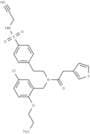
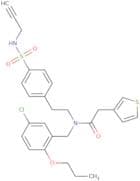
CAS 2454246-18-3
:3-Thiopheneacetamide, N-[(5-chloro-2-propoxyphenyl)methyl]-N-[2-[4-[(2-propyn-1-ylamino)sulfonyl]phenyl]ethyl]-
Description:
3-Thiopheneacetamide, N-[(5-chloro-2-propoxyphenyl)methyl]-N-[2-[4-[(2-propyn-1-ylamino)sulfonyl]phenyl]ethyl]- is a synthetic organic compound characterized by its complex molecular structure, which includes a thiophene ring, amide functional groups, and various aromatic substituents. The presence of a chloro group and a propoxy group contributes to its unique chemical reactivity and potential biological activity. This compound is likely to exhibit properties typical of amides, such as moderate solubility in polar solvents and the ability to participate in hydrogen bonding. The sulfonamide moiety may enhance its pharmacological profile, potentially influencing its interactions with biological targets. Given its intricate structure, this compound may be of interest in medicinal chemistry, particularly in the development of new therapeutic agents. However, specific data regarding its physical properties, biological activity, and safety profile would require further investigation through experimental studies and literature review.
Formula:C27H29ClN2O4S2
Synonyms:- 3-Thiopheneacetamide, N-[(5-chloro-2-propoxyphenyl)methyl]-N-[2-[4-[(2-propyn-1-ylamino)sulfonyl]phenyl]ethyl]-
Sort by
Purity (%)
0
100
|
0
|
50
|
90
|
95
|
100
Found 2 products.
YQ128
CAS:YQ128 is a potent and selective inhibitor of second-generation NLRP3 (NOD-like receptor P3) inflammasome(IC50 of 0.30 µM), with anti-inflammatory activity.Formula:C27H29ClN2O4S2Purity:99.89%Color and Shape:SolidMolecular weight:545.11Ref: TM-T13375
1mg52.00€5mg113.00€1mL*10mM (DMSO)137.00€10mg177.00€25mg289.00€50mg485.00€100mg700.00€YQ128
CAS:Controlled ProductYQ128 is an anticancer drug that targets kinases, enzymes that play a critical role in regulating cell growth and division. This inhibitor has been shown to be effective against various types of cancer cells, including those found in the urine of Chinese patients with cancer. YQ128 works by inducing apoptosis, or programmed cell death, and inhibiting the cell cycle, which prevents cancer cells from dividing and spreading. This medicinal compound is a potent protein kinase inhibitor that has shown promising results in preclinical studies as a potential treatment for tumors. Its ability to target multiple kinases makes it a promising candidate for further development as an anticancer therapy.Formula:C27H29ClN2O4S2Purity:Min. 95%Molecular weight:545.1 g/mol