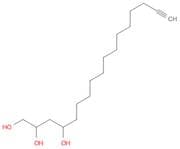
CAS 24607-05-4
:heptadec-16-yne-1,2,4-triol
Description:
Heptadec-16-yne-1,2,4-triol, with the CAS number 24607-05-4, is a chemical compound characterized by its long carbon chain and multiple functional groups. Specifically, it features a 17-carbon backbone with a terminal alkyne group and three hydroxyl (-OH) groups located at the 1st, 2nd, and 4th positions. This structure imparts both hydrophobic and hydrophilic properties, making it amphiphilic. The presence of the alkyne group suggests that it may participate in various chemical reactions, including addition reactions typical of alkynes. The hydroxyl groups contribute to its potential solubility in polar solvents and its ability to form hydrogen bonds, which can influence its reactivity and interactions with other molecules. Heptadec-16-yne-1,2,4-triol may be of interest in biochemical applications, particularly in the study of lipid metabolism or as a potential surfactant due to its unique structural features. Its specific properties, such as melting point, boiling point, and reactivity, would depend on the conditions under which it is studied.
Formula:C17H32O3
InChI:InChI=1/C17H32O3/c1-2-3-4-5-6-7-8-9-10-11-12-13-16(19)14-17(20)15-18/h1,16-20H,3-15H2
InChI key:InChIKey=OHLQBKZXSJYBMK-IAGOWNOFSA-N
SMILES:C#CCCCCCCCCCCCC(CC(CO)O)O
Synonyms:- (2R,4R)-1,2,4-Trihydroxyheptadec-16-yne
- (2R,4R)-16-Heptadecyne-1,2,4-triol
- 16-Heptadecyne-1,2,4-triol
- 16-Heptadecyne-1,2,4-triol, (2R,4R)-
- 16-Heptadecyne-1,2,4-triol, [R-(R*,R*)]-
- Avocadyne
Sort by
Purity (%)
0
100
|
0
|
50
|
90
|
95
|
100
Found 3 products.
Avocadyne
CAS:Avocadyne is a bioactive compound, which is sourced from avocados, specifically from the lipids extracted from the fruit. Its mode of action involves interacting with cellular pathways that are relevant to inflammation and metabolic regulation, showcasing effects that may influence various biochemical processes.Avocadyne has been primarily studied for its potential roles in therapeutic applications due to its anti-inflammatory and antioxidant properties. Research suggests that this compound may modulate signaling pathways related to lipid metabolism and oxidative stress, thus offering potential benefits in the management of conditions such as metabolic disorders and chronic inflammation. Additionally, its ability to interact with these pathways positions Avocadyne as a compound of interest for further investigation in the context of neurodegenerative diseases and certain cancers. Scientifically, the exploration of Avocadyne's effects on cellular models aims to elucidate its mechanism of action and optimize its potential therapeutic applications. This necessitates a thorough understanding of its biochemical interactions and the possible modulation of various molecular targets within diseased states.Formula:C17H32O3Purity:Min. 95%Molecular weight:284.43 g/mol