CAS 24681-60-5
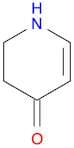
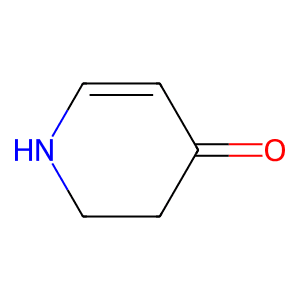
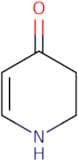
:4(1H)-Pyridinone, 2,3-dihydro-
Description:
4(1H)-Pyridinone, 2,3-dihydro- is an organic compound characterized by its bicyclic structure, which includes a pyridine ring fused to a saturated cyclopentane. This compound features a keto group at the 4-position of the pyridine ring, contributing to its reactivity and potential biological activity. It is typically a colorless to pale yellow liquid or solid, depending on its form and purity. The compound is soluble in polar solvents, such as water and alcohols, due to the presence of the nitrogen atom in the pyridine ring, which can engage in hydrogen bonding. 4(1H)-Pyridinone derivatives are of interest in medicinal chemistry for their potential pharmacological properties, including antimicrobial and anti-inflammatory activities. The compound's molecular structure allows for various substitutions, which can significantly influence its chemical behavior and biological interactions. As with many nitrogen-containing heterocycles, it may also exhibit tautomeric forms, impacting its reactivity and stability under different conditions.
Formula:C5H7NO
Sort by
Purity (%)
0
100
|
0
|
50
|
90
|
95
|
100
Found 4 products.
4(1H)-Pyridinone, 2,3-dihydro-
CAS:Formula:C5H7NOPurity:95%Color and Shape:SolidMolecular weight:97.11521,2,3,4-Tetrahydropyridin-4-one
CAS:1,2,3,4-Tetrahydropyridin-4-one is an organic compound that can be synthesized by a cross-coupling reaction between a pyridine and chloroformate. The reaction mechanism involves nucleophilic addition of the amine to the electrophile followed by reductive elimination. This process leads to the formation of a tetrahydroquinoline skeleton with stereoselectivity. Tetrahydropyridin-4-one can also be synthesized from an iminium ion or an activated pyridinium salt. The resulting product will have a different skeleton because it was synthesized through different mechanisms.Formula:C5H7NOPurity:Min. 95%Molecular weight:97.12 g/mol