CAS 24851-98-7
:Hedione
Description:
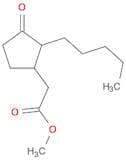
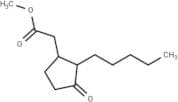
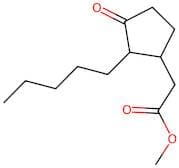
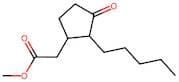
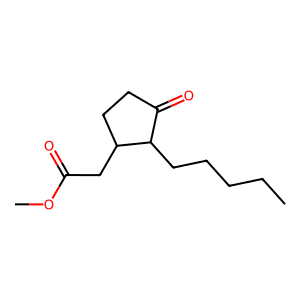
Hedione, chemically known as methyl dihydrojasmonate, is an organic compound with the CAS number 24851-98-7. It is a colorless to pale yellow liquid that is primarily recognized for its floral scent, reminiscent of jasmine, which makes it a popular ingredient in perfumery and fragrance formulations. Hedione is characterized by its unique structure, featuring a cyclopentanone ring and a side chain that contributes to its aromatic properties. It is known for its ability to enhance and amplify other fragrance notes, particularly in floral compositions. Additionally, Hedione has been studied for its potential effects on human emotions and its ability to evoke feelings of relaxation and well-being. The compound is soluble in alcohol and oils, making it versatile for various applications in cosmetics and personal care products. Its stability under normal conditions and low toxicity further contribute to its widespread use in the fragrance industry.
Formula:C13H22O3
InChI:InChI=1S/C13H22O3/c1-3-4-5-6-11-10(7-8-12(11)14)9-13(15)16-2/h10-11H,3-9H2,1-2H3
InChI key:InChIKey=KVWWIYGFBYDJQC-UHFFFAOYSA-N
SMILES:C(C(OC)=O)C1C(CCCCC)C(=O)CC1
Synonyms:- 2-[3-Oxo-2-(pentan-1-yl)cyclopentyl]acetic acid methyl ester
- Cyclopentaneacetic acid, 3-oxo-2-pentyl-, methyl ester
- Dihydrojasmonic acid methyl
- Dihydrojasmonic acid methyl ester
- FEMA No. 3408
- Kharismal
- MDJ
- Methyl (2-pentyl-3-oxocyclopentyl)acetate
- Methyl (3-oxo-2-pentylcyclopentyl)acetate
- Methyl 2-(3-oxo-2-pentylcyclopentyl)acetate
- Methyl 2-(3-oxo-2-pentylcyclopentyl)ethanoate
- Methyl 3-oxo-2-pentyl-cyclopentaneacetate
- Methyl 3-oxo-2-pentylcyclopentaneacetate
- Methyl dihydrojasmonate
- See more synonyms
Sort by
Purity (%)
0
100
|
0
|
50
|
90
|
95
|
100
Found 10 products.
Methyl Dihydrojasmonate (cis- and trans- mixture)
CAS:Formula:C13H22O3Purity:>95.0%(GC)Color and Shape:Colorless to Almost colorless clear liquidMolecular weight:226.32Cyclopentaneacetic acid, 3-oxo-2-pentyl-, methyl ester
CAS:Formula:C13H22O3Purity:98%Color and Shape:LiquidMolecular weight:226.3120Methyl dihydrojasmonate
CAS:Methyl dihydrojasmonate (Kharismal) is an ester and a diffusive aroma compound, with the smell vaguely similar to jasmine.Formula:C13H22O3Purity:99.67%Color and Shape:Colourless LiquidMolecular weight:226.31Methyl Dihydrojasmonate
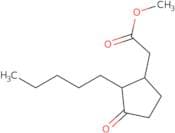
CAS:Methyl DihydrojasmonatePurity:98%,mixture of isomersMolecular weight:226.31g/molMethyl 2-(3-oxo-2-pentylcyclopentyl)acetate
CAS:Formula:C13H22O3Purity:95%Color and Shape:SolidMolecular weight:226.316Methyl (3-Oxo-2-pentylcyclopentyl)acetate
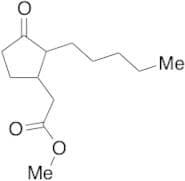
CAS:Controlled ProductApplications Methyl (3-Oxo-2-pentylcyclopentyl)acetate is used in the preparation of hydrogels as delivery systems for the slow release of bioactive carbonyl derivatives.
References Buchs, B., et. al.: Org. Biomol. Chem., 9, 2906 (2011)Formula:C13H22O3Color and Shape:NeatMolecular weight:226.31Hedione
CAS:Hedione is a natural product that has been used in perfumery. It is an aliphatic ketone with the chemical formula of C10H14O2 and a molecular weight of 176.18 g/mol. Hedione is also found in some essential oils, such as jasmine oil. Hedione has been studied as a model system to study fatty acid metabolism and basic protein synthesis in bacteria. The stability of hedione is dependent on its pH and redox potential, with lower pH values leading to increased stability. Hedione can be extracted from water samples using solid phase microextraction (SPME) and analyzed by gas chromatography-mass spectrometry (GC-MS). Hedione can be used for wastewater treatment, as it has been shown to inhibit methyl dihydrojasmonate production in biological treatment processes. Hedione may have potential as an anti-inflammatory agent due to its ability to inhibit malonic acid production in humans at low concentrations (Formula:C13H22O3Purity:Min. 95%Molecular weight:226.31 g/mol