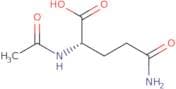
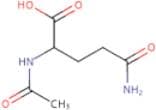
CAS 2490-97-3
:Aceglutamide
Description:
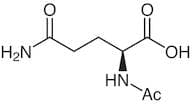
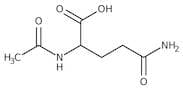
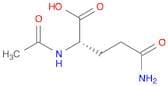
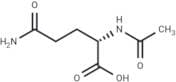
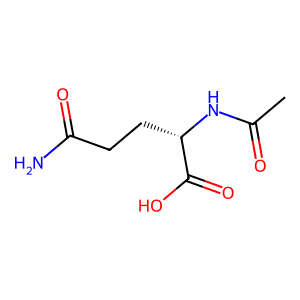
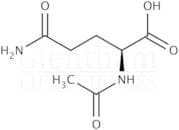
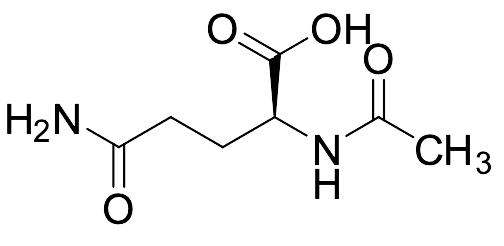
Aceglutamide, with the CAS number 2490-97-3, is a chemical compound that is primarily known for its application in the field of medicine, particularly in the treatment of certain neurological disorders. It is a derivative of glutamic acid, which is an amino acid that plays a crucial role in various metabolic processes. Aceglutamide is characterized by its ability to enhance cognitive function and has been studied for its neuroprotective properties. The compound is typically administered in the form of a salt, which can improve its solubility and bioavailability. In terms of its chemical structure, Aceglutamide features functional groups that contribute to its pharmacological activity. It is generally well-tolerated, but like many pharmaceuticals, it may have side effects that vary among individuals. Its mechanism of action is thought to involve modulation of neurotransmitter systems, particularly those related to glutamate, which is vital for synaptic plasticity and memory formation. Overall, Aceglutamide represents a significant interest in therapeutic research for cognitive enhancement and neuroprotection.
Formula:C7H12N2O4
InChI:InChI=1/C7H12N2O4/c1-4(10)9-5(7(12)13)2-3-6(8)11/h5H,2-3H2,1H3,(H2,8,11)(H,9,10)(H,12,13)/t5-/m0/s1
InChI key:InChIKey=KSMRODHGGIIXDV-YFKPBYRVSA-N
SMILES:[C@@H](CCC(N)=O)(NC(C)=O)C(O)=O
Synonyms:- (2S)-2-Acetamido-5-amino-5-oxopentanoic acid
- (2S)-4-Carbamoyl-2-acetamidobutanoic acid
- <span class="text-smallcaps">L</span>-Glutamine, N<sup>2</sup>-acetyl-
- Ac-Gln-OH
- Aceglutamid
- Acetylglutamide
- Acetylglutamine
- Acutil S
- Glutamine, N<sup>2</sup>-acetyl-, <span class="text-smallcaps">L</span>-
- N-Acetyl-L-glutamine
- N-Alpha-Acetyl-L-Glutamine
- N-α-acetyl-L-glutamine
- N<sup>2</sup>-Acetyl-<span class="text-smallcaps">L</span>-glutamine
- N<sup>2</sup>-Acetylglutamine
- NSC 186896
- N~2~-acetyl-L-glutamine
- N~2~-acetylglutaminato
- α-N-Acetyl-<span class="text-smallcaps">L</span>-glutamine
- Glutamine, N2-acetyl-, L-
- α-N-Acetyl-L-glutamine
- L-Glutamine, N2-acetyl-
- N2-Acetyl-L-glutamine
- α
- ACEGLUTAMIDE
- Aceglutamide (N-Acetyl-L-glutamine)
- L-GLUTAMINE, N-ACETYL-
- N
- ALPHA-N-ACETYL-L-GLUTAMINE
- -Acetyl-L-glutamine
- 2-acetamido-5-amino-5-oxopentanoic acid
- N-ACETYL-L-GLN
- L-2-ACETAMIDOGLUTARAMIC ACID
- N-ACETYL-L-GLUTAMINE CRYSTALLINE
- N-ɑ-Acetyl-L-glutamine, 99%
- N-ACETYL GLUTAMINE
- ACETYL-L-GLUTAMINE
- See more synonyms
Sort by
Purity (%)
0
100
|
0
|
50
|
90
|
95
|
100
Found 11 products.
Nα-Acetyl-L-glutamine
CAS:Formula:C7H12N2O4Purity:>99.0%(T)Color and Shape:White powder to crystalineMolecular weight:188.18N-α-Acetyl-L-glutamine, 99%
CAS:This Thermo Scientific Chemicals brand product was originally part of the Alfa Aesar product portfolio. Some documentation and label information may refer to the legacy brand. The original Alfa Aesar product / item code or SKU reference has not changed as a part of the brand transition to Thermo SciFormula:C7H12N2O4Purity:99%Color and Shape:White, PowderMolecular weight:188.18L-Glutamine, N2-acetyl-
CAS:Formula:C7H12N2O4Purity:97%Color and Shape:SolidMolecular weight:188.1812Aceglutamide
CAS:Aceglutamide (N2-Acetylglutamine) is an acetyl derivative of the amino acid L-glutamine, used to improve memory.Formula:C7H12N2O4Purity:98.47% - 99.86%Color and Shape:SolidMolecular weight:188.18N-Acetyl-L-glutamine
CAS:N-Acetyl-L-glutamineFormula:C7H12N2O4Color and Shape:White PowderMolecular weight:188.18g/molAcetyl-L-glutamine
CAS:Controlled ProductFormula:C7H12N2O4Color and Shape:NeatMolecular weight:188.18Acetyl-L-glutamine
CAS:Acetyl-L-glutamine is a naturally occurring amino acid that is synthesized by the body and can be found in various foods. It has been shown to have many beneficial effects, such as the prevention of bowel disease. Acetyl-L-glutamine has also been shown to stimulate the production of neurotrophic factors, which are proteins that promote neuron growth and survival. This amino acid is used in therapy groups for people with neurodegenerative diseases, such as Parkinson's disease and Alzheimer's disease. Acetyl-L-glutamine may be effective against acute brain injury or stroke due to its ability to increase neuronal survival and inhibit neuronal death. The therapeutic effect of acetyl-L-glutamine on neuronal death may be due to its ability to inhibit apoptosis by preventing reactive oxygen species from binding to DNA. Acetyl-L-glutamine also promotes nerve cell growth and protects against damage caused by ischemia–reperfFormula:C7H12N2O4Purity:Min. 95%Color and Shape:PowderMolecular weight:188.18 g/molN-ACETYL-L-GLUTAMINE
CAS:Formula:C7H12N2O4Purity:97%Color and Shape:No data available.Molecular weight:188.183N-Acetyl-L-Glutamine extrapure, 99%
CAS:Formula:C7H12N2O4Purity:min. 99%Color and Shape:White, Crystalline powderMolecular weight:188.18