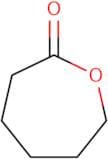
CAS 24980-41-4
:Polycaprolactone
Description:
Polycaprolactone (PCL) is a biodegradable polyester with the CAS number 24980-41-4, known for its versatile properties and applications. It is synthesized through the ring-opening polymerization of ε-caprolactone, resulting in a linear aliphatic polymer. PCL exhibits a low melting point, typically around 60°C, and has a glass transition temperature of approximately -60°C, which contributes to its flexibility and processability. The polymer is characterized by its excellent mechanical properties, including good tensile strength and elongation at break, making it suitable for various applications, including drug delivery systems, tissue engineering, and 3D printing. PCL is also soluble in a range of organic solvents, such as chloroform and dichloromethane, which facilitates its processing into films and fibers. Its biodegradability is a significant advantage, as it can break down in natural environments, making it an attractive option for sustainable materials. Overall, PCL's unique combination of properties allows it to be utilized in both industrial and biomedical fields.
Formula:(C6H10O2)n
InChI:InChI=1/C6H10O2/c7-6-4-2-1-3-5-8-6/h1-5H2
InChI key:InChIKey=PAPBSGBWRJIAAV-UHFFFAOYSA-N
SMILES:O=C1CCCCCO1
Synonyms:- 2-Oxepanone, polyesters
- 2-Oxepanone, polymer with carbon, graft
- 2-Oxepanone, polymer with silica, graft
- 6-Hexanolide homopolymer
- Capa 1215
- Caprolactone homopolymer
- Caprolactone oligomer
- Caprolactone polymer
- Homopolymer, 2-Oxepanone
- Oxepan-2-one homopolymerisee
- Poly(caprolactone)
- Poly(ε-caprolactone)
- Poly(ε-caprolactone) diol
- Poly(ε-caprolactone), monomer-based
- Poly-carprolactone
- Polycaprolactone
- Purasorb PC 17
- Silica, polymer with 2-oxepanone, graft
- Tone Polyol 210
- Tone Polyol 230
- Tone Polyol 240
- Tone Polyol 260
- ε-Caprolactone homopolymer
- ε-Caprolactone polyester
- ε-Caprolactone polymer
- ε-Caprolactone polymers
- ε-Caprolactone-silica graft copolymer
- oxepan-2-one
- Aquaplast, caprolactone
- 2-Oxepanone, homopolymer
- 2-Oxepanone, homopolymer
- Polycaprolactonemn
- Poly(caprolactone), Av. Mn (by GPC) 80,000, Pellets
- POLYCAPROLACTONE, AVERAGE MN CA. 10,000
- Resomer(R) C 209, Poly(caprolactone)
- Polycaprolactone,ester terminated,viscosity ~01.5 dL/g
- Ploycarprolactone
- Polycaprolactone average Mw ~14,000, average Mn ~10,000 by GPC, flakes
- Polycaprolactone,viscosity 3.00~4.25 dL/g
- POLYCAPROLACTONE, AVERAGE MN CA. 80,000
- CURESORB-PCL
- Resomer(R) C 212, Poly(caprolactone) ester terminated
- Poly(ε-caprolactone), medical grade, ester terminated, average M.W. 40,000 - 106,000
- polycaprolactone (average MW 1000-1000000)
- Polycaprolactone,2-Oxepanone homopolymer, 6-Caprolactone polymer
- Polycaprolactone,viscosity 6.00~8.25 dL/g
- Polycaprolactone Standard (Mw 40,000)
- Lactel? BP-0800
- Dyed Polycaprolactone
- OLYCAPROLACTONE AVERAGE MN CA. 42 500
- Polycaprolactone,viscosity 1.25~1.75 dL/g
- Polycaprolactone Standard (Mw 4,000)
- Polycaprolactone average Mn 80,000
- Poly(caprolactone), Flakes
- Poly(ε-caprolactone), medical grade, ester terminated, average M.W. 282,000 - 499,000
- PolycaprolactoneMn 70,000-90,000
- Polycaprolactone,viscosity 0.75~1.25 dL/g
- Poly(ε-caprolactone), medical grade, ester terminated, average M.W. 188,000 - 282,000
- POLY(EPSILON-CAPROLACTONE) (AVERAGE MW ABOUT 10,000)
- Polycaprolactone Standard (Mw 2,000)
- Polycaprolactone,viscosity >11.25 dL/g
- Polycaprolactone Standard (Mw 100,000)
- Polycaprolactone,viscosity 4.25~6.00 dL/g
- Polycaprolactone Standard (Mw 20,000)
- Polycaprolactone,viscosity 0.30~0.75 dL/g
- Polycaprolactone,viscosity 8.25~11.25 dL/g
- Polycaprolactone,ester terminated,viscosity 3.00~4.25 dL/g
- Polycaprolactone average Mn 45,000
- Polycaprolactone Standard (Mw 120,000)
- Resomer(R) C 212, Poly(caprolactone)
- Poly(ε-caprolactone) ,PCL
- Polycaprolactone Standard (Mw 60,000)
- Polycaprolactone,viscosity 2.25~3.00 dL/g
- Poly(ε-caprolactone), medical grade, ester terminated, average M.W. 4,000 - 40,000
- Polycaprolactone - 81200
- POLYCAPROLACTONE AVERAGE MN CA. 42 500 ISO 9001:2015 REACH
- Polycaprolactone average Mw ~14,000, average Mn ~10,000 by GPC
- Polycaprolactone Standard (Mw 13,000)
- Polycaprolactone Standard (Mw 200,000)
- Polycaprolactone,viscosity 1.75~2.25 dL/g
- Poly(ε-caprolactone), medical grade, ester terminated, average M.W. 106,000 - 188,000
- .epsilon.-Caprolactone,homopolymer
- See more synonyms
Sort by
Purity (%)
0
100
|
0
|
50
|
90
|
95
|
100
Found 2 products.
Polycaprolactone
CAS:Polycaprolactone (PCL) is a biodegradable, hydrophobic and semi-crystalline polyester that can be synthesized by the ring-opening polymerization of ε-caprolactone monomer using a variety of anionic, cationic and co-ordination catalysts. It’s used in drug delivery systems due to its high permeability, excellent biocompatibility and full excretion ability once bio-resorbed. It’s suitable for long-term and controlled release of drugs due to its slower biodegradation in comparison to other polymers.
Formula:(C6H10O2)xPurity:Min. 95%