CAS 250674-49-8
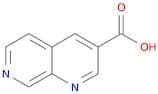
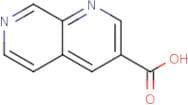
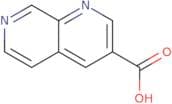
:1,7-Naphthyridine-3-carboxylic acid
Description:
1,7-Naphthyridine-3-carboxylic acid is a heterocyclic organic compound characterized by its bicyclic structure, which consists of a naphthyridine ring system with a carboxylic acid functional group at the 3-position. This compound typically exhibits properties associated with both aromaticity and basicity due to the presence of nitrogen atoms in the ring. It is soluble in polar solvents, which is influenced by the carboxylic acid group that can engage in hydrogen bonding. The compound may display biological activity, making it of interest in medicinal chemistry and drug development. Its structure allows for potential interactions with biological targets, and it may serve as a precursor or building block in the synthesis of more complex molecules. Additionally, the presence of the carboxylic acid group can facilitate further chemical modifications, enhancing its utility in various applications. Overall, 1,7-Naphthyridine-3-carboxylic acid is a versatile compound with significant implications in both research and industrial contexts.
Formula:C9H6N2O2
InChI:InChI=1S/C9H6N2O2/c12-9(13)7-3-6-1-2-10-5-8(6)11-4-7/h1-5H,(H,12,13)
InChI key:InChIKey=HJYYQFVLSQWEDJ-UHFFFAOYSA-N
SMILES:C(O)(=O)C1=CC2=C(N=C1)C=NC=C2
Synonyms:- 1,7-Naphthyridine-3-carboxylic acid
Sort by
Purity (%)
0
100
|
0
|
50
|
90
|
95
|
100
Found 4 products.
1,7-Naphthyridine-3-carboxylic acid
CAS:Formula:C9H6N2O2Purity:98%Color and Shape:SolidMolecular weight:174.15611,7-Naphthyridine-3-carboxylic acid
CAS:1,7-Naphthyridine-3-carboxylic acidPurity:97%Molecular weight:174.16g/mol1,7-Naphthyridine-3-carboxylic acid
CAS:1,7-Naphthyridine-3-carboxylic acid is an antihypertensive agent that belongs to the group of aryloxyalkyl esters. It is used in the treatment of hypertension and other cardiovascular diseases. In vitro, 1,7-naphthyridine-3-carboxylic acid has been shown to inhibit human cytomegalovirus (CMV) replication. This agent has also demonstrated antihypertensive activity in animal models of hypertension. The mechanism of action for this compound may be due to its ability to inhibit the formation of angiotensin II by blocking the conversion of angiotensin I to angiotensin II.Formula:C9H6N2O2Purity:Min. 95%Molecular weight:174.16 g/mol