CAS 25108-32-1
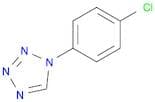
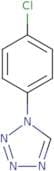
:1H-Tetrazole,1-(4-chlorophenyl)-
Description:
1H-Tetrazole, 1-(4-chlorophenyl)-, with the CAS number 25108-32-1, is an organic compound characterized by its tetrazole ring structure, which consists of four nitrogen atoms and one carbon atom, contributing to its unique chemical properties. The presence of a 4-chlorophenyl group enhances its reactivity and solubility in various organic solvents. This compound is typically a white to off-white solid and is known for its potential applications in pharmaceuticals, particularly as a building block in the synthesis of bioactive molecules. It exhibits properties such as moderate stability under standard conditions, but it can be sensitive to heat and moisture. The tetrazole moiety is known for its ability to form coordination complexes with metals, making it of interest in coordination chemistry. Additionally, 1H-tetrazoles are often explored for their potential as energetic materials due to their nitrogen-rich structure, which can lead to high energy release upon decomposition. Overall, this compound is significant in both synthetic organic chemistry and materials science.
Formula:C7H5ClN4
Synonyms:- 1H-Tetrazole,1-(p-chlorophenyl)- (6CI,8CI)
- 4-Chloro-1-phenyl-1H-tetrazole
- Nsc 111893
Sort by
Purity (%)
0
100
|
0
|
50
|
90
|
95
|
100
Found 3 products.
1-(4-Chlorophenyl)-1H-1,2,3,4-tetrazole
CAS:1-(4-Chlorophenyl)-1H-1,2,3,4-tetrazole is a chemical compound that was synthesized in order to study the uptake rate of heavy metals by marine sponges. This molecule is a cross-linking agent that can be used to form protein molecules with other proteins or amino acids. It has been found to have an antigenic profile and is also able to cause growth regulation in bacteria. The element analysis of 1-(4-chlorophenyl)-1H-1,2,3,4-tetrazole reveals the presence of carbon (C), hydrogen (H), nitrogen (N), and chlorine (Cl). The molecular weight of this compound is 271.25 g/mol and its melting point is 155°C.
Formula:C7H5ClN4Purity:Min. 95%Molecular weight:180.59 g/mol