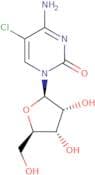
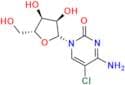
CAS 25130-29-4
:Cytidine, 5-chloro-(8CI,9CI)
Description:
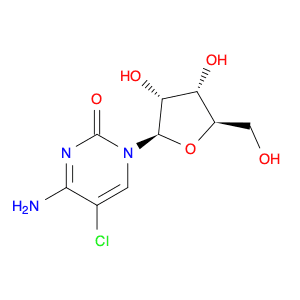
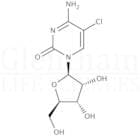
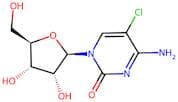
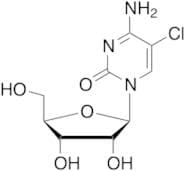
Cytidine, 5-chloro-(8CI,9CI), with the CAS number 25130-29-4, is a nucleoside analog that features a pyrimidine base, specifically cytosine, linked to a ribose sugar. The distinguishing characteristic of this compound is the presence of a chlorine atom at the 5-position of the cytosine ring, which can influence its biological activity and interactions. This modification can affect the compound's ability to participate in nucleic acid synthesis and its potential as an antiviral or anticancer agent. Cytidine derivatives are often studied for their roles in cellular metabolism and their potential therapeutic applications. The compound is typically characterized by its solubility in polar solvents, stability under physiological conditions, and its ability to form hydrogen bonds, which is crucial for its interaction with nucleic acids. As a synthetic analog, it may exhibit altered pharmacokinetics and pharmacodynamics compared to natural nucleosides, making it a subject of interest in medicinal chemistry and drug development.
Formula:C9H12ClN3O5
Synonyms:- 5-Chlorocytidine
Sort by
Purity (%)
0
100
|
0
|
50
|
90
|
95
|
100
Found 7 products.
Cytidine, 5-chloro- (8CI,9CI)
CAS:Formula:C9H12ClN3O5Purity:97%Color and Shape:SolidMolecular weight:277.66174-Amino-5-chloro-1-((2R,3R,4S,5R)-3,4-dihydroxy-5-(hydroxymethyl)tetrahydrofuran-2-yl)pyrimidin-2(1H)-one
CAS:4-Amino-5-chloro-1-((2R,3R,4S,5R)-3,4-dihydroxy-5-(hydroxymethyl)tetrahydrofuran-2-yl)pyrimidin-2(1H)-onePurity:97%Molecular weight:277.66g/mol5-Chlorocytidine
CAS:Controlled ProductFormula:C9H12ClN3O5Color and Shape:NeatMolecular weight:277.665-Chlorocytidine
CAS:5-Chlorocytidine is a reactive oxygen species that can be generated by the hypochlorous acid (HOCl) or by atp, which is a nucleotide. 5-Chlorocytidine has been shown to induce apoptosis in virus-infected mammalian cells and macrophage-like cells. It also induces pro-inflammatory cytokines and has potential as a biomarker for leukemia and inflammatory diseases. 5-Chlorocytidine reacts with proteins and lipids in the atherosclerotic lesion to produce other reactive oxygen species, such as hydrogen peroxide, which may lead to cell death.Formula:C9H12ClN3O5Purity:Min. 95 Area-%Color and Shape:White PowderMolecular weight:277.66 g/mol