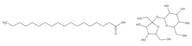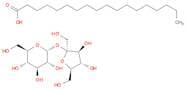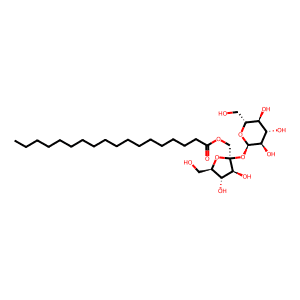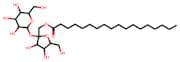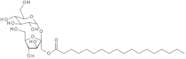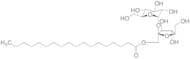
CAS 25168-73-4
:Sucrose monooctadecanoate
- Estearato De Sacarosa
- Nsc 192745
- Ryoto S 1670
- Ryoto Sugar Ester MO-C 18
- Ryoto Sugar Ester S 1670
- S 1670
- Saccharose monostearate
- Saccharose stearate
- Stearate de saccharose
- Stearic acid sucrose ester
- Stearic acid, monoester with sucrose
- Sucrapan S
- Sucrose Stearate
- Sucrose monooctadecanoate
- Sucrose monostearic acid ester
- Sucrose, monostearate
- Sucrosestearat
- Sugar Ester S 1670
- Surfhope SE Pharma J-1809
- α-<span class="text-smallcaps">D</smallcap>-Glucopyranoside, β-<smallcap>D</span>-fructofuranosyl, monooctadecanoate
- β-D-Fructofuranosyl-α-D-glucopyranoside monooctadecanoate
- octadecanoic acid - hex-2-ulofuranosyl hexopyranoside (1:1)
- 2,5-anhydro-5-(hydroxymethyl)-6-O-octadecanoyl-alpha-D-gluco-D-manno-undec-6-ulopyranose
- 1-O-octadecanoyl-beta-D-fructofuranosyl alpha-D-glucopyranoside
- See more synonyms
Sucrose stearate
CAS:Sucrose stearate is used as an emulsifier in many beauty applications and cosmetics such as makeup products, cleansing formulas. Emulsifiers aid the blending of water and fatty substances, a common ingredient in many foods. This Thermo Scientific Chemicals brand product was originally part of the AlFormula:C30H58O13Color and Shape:White to yellow, PowderMolecular weight:626.78Sucrose stearate
CAS:Sucrose stearatePurity:Monoester content 70%, HLB value 15Molecular weight:608.77g/molSucrose stearate
CAS:Formula:C30H56O12Color and Shape:White to off-white powderMolecular weight:608.75α-d-glucopyranoside
CAS:α-d-glucopyranosidePurity:Monoester content70%,HLB value15Molecular weight:608.76g/molSucrose stearate - 70% monostearate
CAS:The "tallowate" esters are probably the best known derivatives of sucrose and many attempts have been made to commercialise them in order to exploit their excellent surfactant functionalities. The most functional products are the mono- and diesters of the tallow acids (stearic, palmitic, oleic) with hydrophile-lipophile balance (HLB) values that lend themselves to surfactant applications in foods and cosmetics. They also have other uses, for example in coating fruits with a semipermeable membrane that acts as a preservative. Manufacturing economics have prevented these products from mass production and they remain in niche applications.
Formula:C30H56O12Purity:Min. 90 Area-%Color and Shape:White Off-White PowderMolecular weight:608.77 g/molSucrose stearate - 25-33% monostearate
CAS:The "tallowate" esters are probably the best known derivatives of sucrose and many attempts have been made to commercialise them in order to exploit their excellent surfactant functionalities. The most functional products are the mono- and diesters of the tallow acids (stearic, palmitic, oleic) with hydrophile-lipophile balance (HLB) values that lend themselves to surfactant applications in foods and cosmetics. They also have other uses, for example in coating fruits with a semipermeable membrane that acts as a preservative. Manufacturing economics have prevented these products from mass production and they remain in niche applications.
Formula:C30H56O12Color and Shape:White PowderMolecular weight:608.77 g/molSucrose Stearate - 70% monostearate
CAS:Applications Sucrose stearate is a sucrose fatty acids ester, used to enhance the oral delivery of alendronate by enhancing intestinal absorption. Sucrose stearate displays antibacterial properties towards Bacillus cereus, Bacillus subtilis, Staphylococcus aureus, Escherichia coli and Salmonella typhimurium.
References Alama, T.; et al.: Int. J. Pharm., 515, 476 (2016); Zhao, L.; et al.: Food Chem., 187, 370 (2015).Formula:C30H56O12Color and Shape:Off-WhiteMolecular weight:608.76