CAS 25199-77-3
:Quinoline, 4-(trifluoromethyl)-
Description:
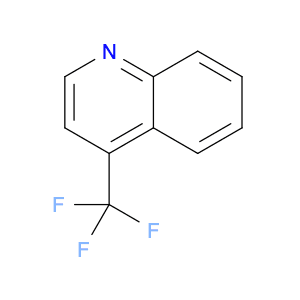
Quinoline, 4-(trifluoromethyl)-, also known by its CAS number 25199-77-3, is a heterocyclic aromatic compound characterized by a fused bicyclic structure consisting of a benzene ring and a pyridine ring. The presence of a trifluoromethyl group (-CF3) at the 4-position of the quinoline ring significantly influences its chemical properties, enhancing its lipophilicity and potentially altering its reactivity. This compound is typically a colorless to pale yellow liquid or solid, depending on its form, and is known for its aromatic odor. Quinoline derivatives, including this compound, are of interest in various fields, including pharmaceuticals and agrochemicals, due to their biological activity and potential applications as intermediates in organic synthesis. The trifluoromethyl group can impart unique electronic properties, making it a valuable moiety in drug design and development. Safety data indicates that, like many fluorinated compounds, it should be handled with care due to potential toxicity and environmental concerns.
Formula:C10H6F3N
Sort by
Purity (%)
0
100
|
0
|
50
|
90
|
95
|
100
Found 4 products.
Quinoline, 4-(trifluoromethyl)-
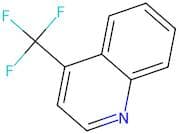
CAS:Formula:C10H6F3NPurity:96%Color and Shape:SolidMolecular weight:197.15654-(Trifluoromethyl)quinoline
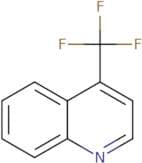
CAS:4-(Trifluoromethyl)quinolinePurity:97%Color and Shape:SolidMolecular weight:197.16g/mol4-(Trifluoromethyl)quinoline
CAS:4-(Trifluoromethyl)quinoline (4-TFMQ) is an aniline derivative that can be used in the preparation of heroin. 4-TFMQ is a photophysics reactive compound and has been shown to react with nucleophiles, such as amines, thiols, and alcohols. 4-TFMQ has been shown to react with acidic compounds such as water and alcohols. The fluorescence of 4-TFMQ is sensitive to changes in pH. It also reacts with quinoline derivatives and fluorescent quinolinecarboxylic acid esters. Cross-coupling reactions are used to attach the 4-TFMQ molecule to other organic molecules. These reactions are often performed using palladium catalysis and copper salts.Formula:C10H6F3NPurity:Min. 95%Molecular weight:197.16 g/mol