CAS 25233-30-1
:polyaniline
Description:
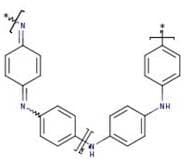
Polyaniline is a conducting polymer known for its unique electrical, optical, and chemical properties. It is derived from the polymerization of aniline, an aromatic amine, and can exist in various oxidation states, which significantly influence its conductivity and color. Polyaniline can be synthesized through several methods, including chemical and electrochemical polymerization, and it can be doped with various acids to enhance its conductivity. The material exhibits a distinctive emerald green color in its doped form and can transition to different colors depending on its oxidation state. Polyaniline is characterized by its stability, ease of processing, and ability to be used in various applications, including sensors, batteries, and antistatic coatings. Additionally, it is soluble in certain solvents when doped, making it versatile for different formulations. Its environmental stability and potential for use in flexible electronics further highlight its significance in materials science and engineering. Overall, polyaniline represents a fascinating area of research due to its combination of organic and inorganic characteristics.
Formula:(C6H7N)x
InChI:InChI=1S/C6H7N/c7-6-4-2-1-3-5-6/h1-5H,7H2
InChI key:InChIKey=PAYRUJLWNCNPSJ-UHFFFAOYSA-N
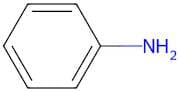
SMILES:NC1=CC=CC=C1
Synonyms:- Anilide SB 50
- Aniline acetate homopolymer
- Aniline homopolymer
- Aniline polymer
- Aniline, polymers
- Anirido
- Benzenamine, homopolymer
- Corrpassiv 4900
- Corrpassiv 4901
- D 1002W
- D 1500W
- Jgt Es 1
- Jgt-Eb 1
- Kemipol
- Ns 09/205W
- Ormecon
- P 4000W
- Panipol W
- Pass 01
- Polyaniline (emeraldine base)
- Polyemeraldine
- Polyphenyleneamine
- Skippers Corrpassiv
- Versicon
- Xicp O501
- Xz-Ba 02
- Xz-Bay 03
- See more synonyms
Sort by
Purity (%)
0
100
|
0
|
50
|
90
|
95
|
100
Found 5 products.
Polyaniline, emeraldine base
CAS:Conductive polymer
Formula:(C12H10N2)x(C12H8N2)yColor and Shape:powder, Dark brownPolyaniline, average MW 40000-60000
CAS:Polyaniline (emeraldine base) is a conducting polymer that has the ability to transmit electrical signals. It has been used in a variety of applications, including biocompatible sensors and electrodes for real-time monitoring of biological processes. Graphical representations are often used to illustrate the effects of polyaniline on muscle tissue. This polymer can be viewed as a schematic representation of skeletal muscle cells, which may aid in understanding its biocompatibility. The process of cell proliferation can be observed using microscopy techniques. Polyaniline is also able to be electrospun into fibers for use as scaffolds for tissue engineering applications.
Formula:(C6H7N)xPurity:Min. 95%Molecular weight:121.18 g/mol