CAS 253-66-7
:Cinnoline
Description:
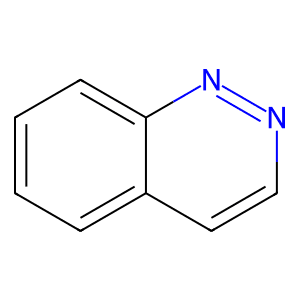
Cinnoline, with the CAS number 253-66-7, is an organic compound belonging to the class of heterocyclic compounds. It is characterized by a bicyclic structure that consists of a fused pyridine and pyrazole ring, making it a member of the diazine family. Cinnoline is typically a colorless to pale yellow liquid or solid, depending on its form and purity. It is known for its aromatic properties and can exhibit various chemical reactivity due to the presence of nitrogen atoms in its structure. Cinnoline is soluble in organic solvents such as ethanol and ether but has limited solubility in water. This compound has garnered interest in medicinal chemistry for its potential biological activities, including antimicrobial and antitumor properties. Additionally, cinnoline derivatives are studied for their applications in dye synthesis and as ligands in coordination chemistry. Safety precautions should be taken when handling cinnoline, as it may pose health risks upon exposure.
Formula:C8H6N2
InChI:InChI=1S/C8H6N2/c1-2-4-8-7(3-1)5-6-9-10-8/h1-6H
InChI key:InChIKey=WCZVZNOTHYJIEI-UHFFFAOYSA-N
SMILES:C12=C(C=CC=C1)N=NC=C2
Synonyms:- 1,2-Benzodiazine
- 1,2-Diazanaphthalene
- Benzo[c]pyridazine
- NSC 58374
- α-Phenodiazine
- Cinnoline
Sort by
Purity (%)
0
100
|
0
|
50
|
90
|
95
|
100
Found 5 products.
Cinnoline
CAS:<p>Cinnoline is a chemical compound that is structurally similar to phenol, containing a hydroxyl group, two nitrogen atoms and a cyclic structure. Cinnoline has been shown to have anti-inflammatory activity in rats with adjuvant-induced arthritis. The mechanism of the anti-inflammatory effect of cinnoline is not fully understood, but it may be due to its stability and ability to bind to biological molecules or its conformational properties. Cinnoline does not react with nitric acid, making it a good candidate for use in infectious diseases such as tuberculosis. It has also been shown to be stable in human serum and has low pharmacokinetic properties. The fluorescence intensity of cinnoline was found to increase when exposed to an electrochemical potential and can be used as a probe molecule for pharmacokinetics studies.</p>Formula:C8H6N2Purity:Min. 95%Color and Shape:PowderMolecular weight:130.15 g/mol