CAS 25322-68-3
:Polyethylene glycol
Description:
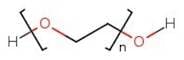
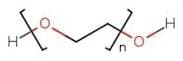
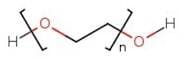
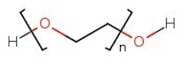
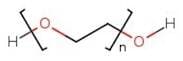
Polyethylene glycol (PEG), with the CAS number 25322-68-3, is a versatile polymer known for its hydrophilic properties and biocompatibility. It is composed of repeating units of ethylene oxide, resulting in a structure that can vary in molecular weight, which influences its physical and chemical characteristics. PEG is typically a colorless, odorless, and viscous liquid or a waxy solid, depending on its molecular weight. It is soluble in water and many organic solvents, making it useful in a wide range of applications, including pharmaceuticals, cosmetics, and food products. PEG serves as a lubricant, humectant, and emulsifier, and is often used in drug formulations to enhance solubility and bioavailability. Additionally, its non-toxic nature and ability to form hydrogels make it valuable in biomedical applications, such as drug delivery systems and tissue engineering. However, the specific properties of PEG can vary significantly with its molecular weight and formulation, which must be considered when selecting it for particular applications.
Formula:(C2H4O)nH2O
InChI:InChI=1S/C2H6O2/c3-1-2-4/h3-4H,1-2H2
InChI key:InChIKey=LYCAIKOWRPUZTN-UHFFFAOYSA-N
SMILES:C(CO[H])O
Synonyms:- 1660O
- 1660S
- 3,6,9,12,15,18,21,24,27,30,33,36,39-Tridecaoxahentetracontane-1,41-diol
- 400Dab8
- Alkox
- Aquaffin
- Badimol
- Carbowachs
- Carbowax
- Colonsoft
- Db-Wax
- Duraseal
- FPR
- Forlax
- GlycoLax
- IW
- Isocolan
- KleanPrep
- Macrogol
- MiraLax
- Modopeg
- Muvinlax
- Nosilen
- Nycoline
- OEG
- PEB
- PEG
- PEG-(OH)<sub>2</sub>
- PEG-diol
- PEO
- PER
- Pegorion
- Peo-Pf
- Peo-Pfz
- Peo-Pfzr
- Peopo-A
- Polikol
- Poly(Oxy-1,2-Ethanediyl),A-Hydro-W-Hydroxy
- Poly(oxy-1,2-ethanediyl)
- Polyaethylenglykol
- Polyethox
- Polyethyleneglycol
- Polyetox
- Polygol
- Polyhydroxyethylene
- Polyosm
- Polyox
- Polyoxydin
- Polyoxyethylenediol
- Postonal
- Sed-Fix
- Slovapeg
- Solbase
- SpaceOAR
- Superox
- Ucarfloc
- α-Hydro-ω-hydroxypoly(oxy-1,2-ethanediyl)
- α-Hydro-ω-hydroxypoly(oxyethylene)
- PEG 6000
- Polyethylene glycol
- Polyethylene Glycol
- PEG 6000, MB Grade (1.12033)
- Poly(oxy-1,2-ethanediyl), α-hydro-ω-hydroxy-
- PEG 200
- Poly(ethylene oxide)
- Poly(ethylene glycol)
- Polyethyleneoxidemonomethacryloxymonotrimethylsiloxyterminated
- Poly ethylene glycol
- O-Methacryloxy(polyethyleneoxy)trimethylsilane
- poly(oxyethylene)
- Polyethylene glygcol
- PEG 200-8000
- Polyethylene glycol
- Ethylene oxide, homopolymer
- Polyethylene Glycol 5000000
- PolyethyleneoxideMW
- Aquacide III
- Polyethylene glycol series
- Tri-(2,3-Dibromopropyl) Phosphate
- Glycols, polyethylene
- Polyethylene glycol PEG
- Polyethylene glycol - 6000 grade
- Carmowax
- PEG 8000
- PEG 1000
- Ethylene glycol 8000 polymer
- PEG-400
- polyethylene oxide standard 511000
- Oxide Wax AN
- PEG 400
- Polyethylene Oxide
- PEG 600
- See more synonyms
Sort by
Purity (%)
0
100
|
0
|
50
|
90
|
95
|
100
Polyethylene glycol 1,500
CAS:Cell fusion induced by polyethylene glycol(PEG) has become a standard method in somatic cell genetics. PEG promoted cell fusion is involved in the production of hybridoma cells. This Thermo Scientific Chemicals brand product was originally part of the Alfa Aesar product portfolio. Some documentationFormula:(C2H4O)nColor and Shape:White, Waxy flakesPolyethylene glycol 1,000
CAS:Polyethylene glycol is used as an excipent in pharmaceutical products. It is used in the precipitation of proteins as well as in the separation and purification of biomolecules and in the induction of cell hybridization. It acts as a fusing agent to enhance the effect of macrophages on hybridoma; asFormula:(C2H4O)nColor and Shape:Waxy solid, WhitePolyethylene Glycol 6000, Flakes, Ultrapure
CAS:Thermo Scientific Polyethylene Glycol 6000 Flakes UltrapureFormula:(C2H4O)nColor and Shape:White or slightly yellowish, FlakesMolecular weight:5400-6600Polyethylene oxide, M.W. >5,000,000
CAS:It is used as a thickening agent and gel binder in the pharmaceutical industry. It is used as a analytical reagents, substrates, flocculants, dispersants, lubricants, emulsifiers, moisturizers, food additives. This Thermo Scientific Chemicals brand product was originally part of the Alfa Aesar produFormula:(C2H4O)nColor and Shape:White, Powder/flakePolyethylene glycol 600
CAS:Polyethylene glycol is used as a humectant in inks and adhesives. It acts as a solvent in soldering flux and as a dye carrier in inks. It is also useful as a modifier and binder in latex paint. It is used as an additive in synthetic lubricants, cutting oil and hydraulic fluids. It plays an importantFormula:(C2H4O)nColor and Shape:Liquid as melt or white low-melting solid, ColorlessPolyethylene oxide, M.W. 1,000,000
CAS:Polyethylene oxide is used as lubricants for rubber molds, textiles, metalworking and ceramics production. Further, it is used in food packaging, water-based paints, polishes, paper coatings, dispersing agents and chemical intermediates. In addition, it is used to impart viscosity to and modify theFormula:(C2H4O)nColor and Shape:White to off-white, Powder or crystals or crystalline powderPolyethylene glycol 4,000
CAS:Polyethylene glycol is used in gene delivery of protoplast transfection and incubation. It is used in the preparation of extraction for measuring cytosolic phosphoenolpyruvate carboxykinase (PEPCK) from plant tissues. It is useful to mediate DNA transformation into protoplasts derived from rice leafFormula:(C2H4O)nColor and Shape:Powder or flakes or granular, WhitePolyethylene glycol 6,000
CAS:Polyethylene glycol is used in the modification of therapeutic proteins and peptides to enhance its solubility. It is also used in the fabrication of bioactive and immuno isolating barriers for encapsulation of cells. In Gas chromatorgraphy, it is used as a polar stationary phase. It is used as moldFormula:(C2H4O)nColor and Shape:White to cream, Powder or flakesHIGH-MOLECULAR-MASS MACROGOL CRS
CAS:HIGH-MOLECULAR-MASS MACROGOL CRSFormula:C9H17NO3Molecular weight:187.2362Polyethylene Glycol 3000
CAS:Polyethers, nesoiFormula:HOCH2CH2nOHColor and Shape:Colorless FlakesMolecular weight:187.2362Polyethylene Glycol 8000
CAS:Polyethers, nesoiFormula:HOCH2CH2nOHColor and Shape:White GranularMolecular weight:7000 - 9000Polyethylene Glycol 600
CAS:Polyethers, nesoiFormula:HOCH2CH2nOHColor and Shape:LiquidMolecular weight:570 - 630Polyethylene Glycol 400
CAS:Polyethers, nesoiFormula:HOCH2CH2nOHColor and Shape:Colorless Clear LiquidMolecular weight:380 - 420Polyethylene Glycol 300
CAS:Polyethers, nesoiFormula:HOCH2CH2nOHColor and Shape:LiquidMolecular weight:285 - 315Polyethylene Glycol 200
CAS:Polyethers, nesoiFormula:HOCH2CH2OnHColor and Shape:Colorless Clear LiquidMolecular weight:About 200 (44.05 monomer)Polyethylene Glycol 3350
CAS:Polyethers, nesoiFormula:HOCH2CH2nOHColor and Shape:White SolidMolecular weight:3015 - 3685Polyethylene Glycol 6000
CAS:Polyethers, nesoiFormula:HOC2H4nOHColor and Shape:Colorless FlakesMolecular weight:5400 - 6600Polyethylene Oxide
CAS:Polyethers, nesoiFormula:(CH2CH2O)nColor and Shape:White Off-White PowderMolecular weight:5000000Polyethylene Glycol 4000
CAS:Polyethers, nesoiFormula:HOCH2CH2nOHColor and Shape:White Off-White Waxy Solid FlakesMolecular weight:3600 - 4400