CAS 25322-68-3
:Polyethylene glycol
Description:
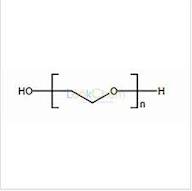
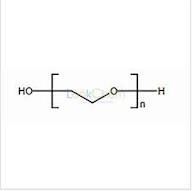
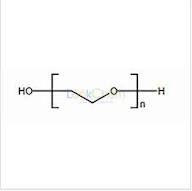
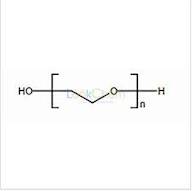
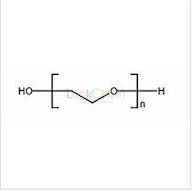
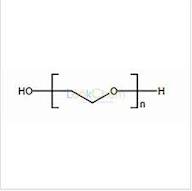
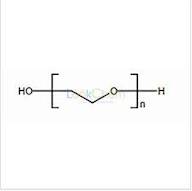
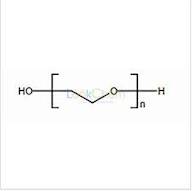
Polyethylene glycol (PEG), with the CAS number 25322-68-3, is a versatile polymer known for its hydrophilic properties and biocompatibility. It is composed of repeating units of ethylene oxide, resulting in a structure that can vary in molecular weight, which influences its physical and chemical characteristics. PEG is typically a colorless, odorless, and viscous liquid or a waxy solid, depending on its molecular weight. It is soluble in water and many organic solvents, making it useful in a wide range of applications, including pharmaceuticals, cosmetics, and food products. PEG serves as a lubricant, humectant, and emulsifier, and is often used in drug formulations to enhance solubility and bioavailability. Additionally, its non-toxic nature and ability to form hydrogels make it valuable in biomedical applications, such as drug delivery systems and tissue engineering. However, the specific properties of PEG can vary significantly with its molecular weight and formulation, which must be considered when selecting it for particular applications.
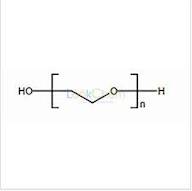
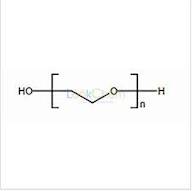
Formula:(C2H4O)nH2O
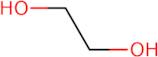
InChI:InChI=1S/C2H6O2/c3-1-2-4/h3-4H,1-2H2
InChI key:InChIKey=LYCAIKOWRPUZTN-UHFFFAOYSA-N
SMILES:C(CO[H])O
Synonyms:- 1660O
- 1660S
- 3,6,9,12,15,18,21,24,27,30,33,36,39-Tridecaoxahentetracontane-1,41-diol
- 400Dab8
- Alkox
- Aquaffin
- Badimol
- Carbowachs
- Carbowax
- Colonsoft
- Db-Wax
- Duraseal
- FPR
- Forlax
- GlycoLax
- IW
- Isocolan
- KleanPrep
- Macrogol
- MiraLax
- Modopeg
- Muvinlax
- Nosilen
- Nycoline
- OEG
- PEB
- PEG
- PEG-(OH)<sub>2</sub>
- PEG-diol
- PEO
- PER
- Pegorion
- Peo-Pf
- Peo-Pfz
- Peo-Pfzr
- Peopo-A
- Polikol
- Poly(Oxy-1,2-Ethanediyl),A-Hydro-W-Hydroxy
- Poly(oxy-1,2-ethanediyl)
- Polyaethylenglykol
- Polyethox
- Polyethyleneglycol
- Polyetox
- Polygol
- Polyhydroxyethylene
- Polyosm
- Polyox
- Polyoxydin
- Polyoxyethylenediol
- Postonal
- Sed-Fix
- Slovapeg
- Solbase
- SpaceOAR
- Superox
- Ucarfloc
- α-Hydro-ω-hydroxypoly(oxy-1,2-ethanediyl)
- α-Hydro-ω-hydroxypoly(oxyethylene)
- PEG 6000
- Polyethylene glycol
- Polyethylene Glycol
- PEG 6000, MB Grade (1.12033)
- Poly(oxy-1,2-ethanediyl), α-hydro-ω-hydroxy-
- PEG 200
- Poly(ethylene oxide)
- Poly(ethylene glycol)
- Polyethyleneoxidemonomethacryloxymonotrimethylsiloxyterminated
- Poly ethylene glycol
- O-Methacryloxy(polyethyleneoxy)trimethylsilane
- poly(oxyethylene)
- Polyethylene glygcol
- PEG 200-8000
- Polyethylene glycol
- Ethylene oxide, homopolymer
- Polyethylene Glycol 5000000
- PolyethyleneoxideMW
- Aquacide III
- Polyethylene glycol series
- Tri-(2,3-Dibromopropyl) Phosphate
- Glycols, polyethylene
- Polyethylene glycol PEG
- Polyethylene glycol - 6000 grade
- Carmowax
- PEG 8000
- PEG 1000
- Ethylene glycol 8000 polymer
- PEG-400
- polyethylene oxide standard 511000
- Oxide Wax AN
- PEG 400
- Polyethylene Oxide
- PEG 600
- See more synonyms
Filter by
Purity percentage
0
100
|
0
|
50
|
90
|
95
|
100
- Lower prices
- Higher prices
- Lower purities
- Higher purities
- Faster estimated delivery
PEG 4000
CAS:Controlled ProductPEG 4000 is a polyethylene glycol polymer used as a linker. It is used to attached PEG to proteins, peptides, oligonucleotides, nanoparticles and small molecules via pegylation, a bioconjugation technique
Formula:(C2H4O)n•H2OPurity:Min. 95%Color and Shape:White PowderPolyethylene Glycol 3350 Flakes (PEG 3350) ExiPlus, Multi-Compendial
CAS:Color and Shape:White, Crystalline flake, Clear, ColourlessMolecular weight:3000-3500Polyethylene Glycol 9000 Flakes (PEG 9000) ExiPlus, Multi-Compendial
CAS:Color and Shape:White, Crystalline powder/flakes, Clear, ColourlessPolyethylene Glycol 8000 Flakes (PEG 8000) for molecular biology
CAS:Color and Shape:White, Flakes/Powder, Clear, ColourlessMolecular weight:~8000Polyethylene Glycol 6000 Flakes (PEG 6000)
CAS:Color and Shape:White, Flakes/Powder, Clear, ColourlessMolecular weight:5000 - 7000Polyethylene Glycol 4000 Flakes (PEG 4000) Flakes ExiPlus, Multi-Compendial
CAS:Color and Shape:White, Flakes, Clear, ColourlessMolecular weight:3500 - 4500Polyethylene Glycol 400 (PEG 400) ExiPlus, Multi-Compendial
CAS:Color and Shape:Clear, Colourless, Viscous liquidMolecular weight:380 -420Polyethylene Glycol 6000 Flakes (PEG 6000) ExiPlus, Multi-Compendial
CAS:Color and Shape:White, Flakes, Clear, ColourlessMolecular weight:5000-7000Polyethylene Glycol 20000 Flakes (PEG 20000)
CAS:Color and Shape:White, Hard Flakes/Powder, Clear, ColourlessPolyethylene Glycol 8000 Flakes (PEG 8000) ExiPlus, Multi-Compendial
CAS:Color and Shape:White, Flakes/Powder, Clear, ColourlessMolecular weight:~8000Polyethylene Glycol 20000 Flakes (PEG 20000) ExiPlus, Multi-Compendial
CAS:Color and Shape:White, Hard flakes, Clear, ColourlessPolyethylene Glycol 400 (PEG 400)
CAS:Color and Shape:Clear, Colourless, Viscous liquidMolecular weight:380 -420Polyethylene Glycol 4000 Flakes (PEG 4000)
CAS:Color and Shape:White, Waxy solid /Flakes, Clear, ColourlessMolecular weight:3500 - 4500