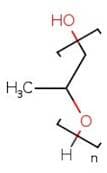
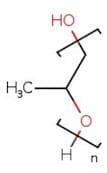
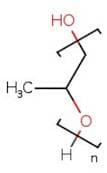
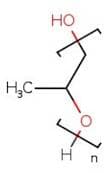
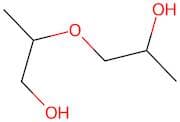
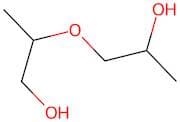
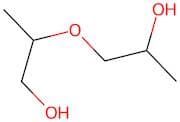
![Poly[oxy(methyl-1,2-ethanediyl)], α-hydro-ω-hydroxy-](/_next/image/?url=https%3A%2Fstatic.cymitquimica.com%2Fcas-image%2Fthumb-webp%2F390304-poly-propylene-glycol.webp&w=3840&q=75)
CAS 25322-69-4
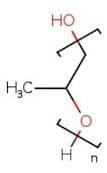
:Poly[oxy(methyl-1,2-ethanediyl)], α-hydro-ω-hydroxy-
Description:
Poly[oxy(methyl-1,2-ethanediyl)], α-hydro-ω-hydroxy-, commonly known as polyethylene glycol (PEG), is a hydrophilic polymer characterized by its repeating units of ethylene glycol. This substance is typically a colorless, odorless, and viscous liquid or solid, depending on its molecular weight. PEG is soluble in water and many organic solvents, making it versatile for various applications. Its properties include low toxicity, biocompatibility, and the ability to form hydrogen bonds, which contribute to its use in pharmaceuticals, cosmetics, and food products. PEG serves as a lubricant, humectant, and emulsifier, and it is also employed in drug delivery systems due to its ability to enhance solubility and stability of active compounds. Additionally, PEG can be modified to create derivatives with specific functionalities, expanding its utility in industrial and biomedical fields. Overall, its unique characteristics make PEG a valuable compound in both commercial and research applications.
Formula:(C3H6O)n
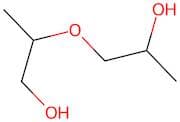
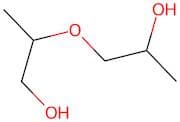
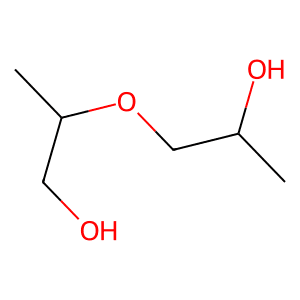
InChI:InChI=1/C6H14O3/c1-5(8)4-9-6(2)3-7/h5-8H,3-4H2,1-2H3/t5-,6+/m0/s1
Synonyms:- 2000Lm
- 3003N
- 3600K
- 3600Z
- 835E
- Emkapyl
- PPG
- Paral
- Poly(1,2-epoxypropane)
- Poly(methyloxirane)
- Poly[oxy(methyl-1,2-ethanediyl)]α-hydro-ω-hydro)
- Polyoxypropylenediol
- Polypropyleneglycol
- Polypropylenglykol
- Prodiol
- Smc-Ppf
- Smc-Pps
- Smc-Ppt
- Smc-Ppz
- Vittacol
- α-Hydro-ω-hydroxypoly(oxypropylene)
- α-Hydro-ω-hydroxypoly[oxy(methyl-1,2-ethanediyl)]
- α-Hydro-ω-hydroxypoly[oxy(methylethylene)]
- Poly(oxypropylene) glycol
- poly(propene oxide)
- P 400
- Poly(propylene glycol) 3000
- Poly(propylene glycol)
- (2S)-2-{[(2S)-2-hydroxypropyl]oxy}propan-1-ol
- Polypropylene glycol diol
- Poly[oxy(methyl-1,2-ethanediyl)], α-hydro-ω-hydroxy-
- Polypropylene glycol
- polypropylene glycol standard 5300
- Polypropylene glycol 2000
- Poly(propylene glycol) 4000
- Poly(propylene glycol) 1000
- (2R)-2-{[(2R)-2-hydroxypropyl]oxy}propan-1-ol
- Glycols, polypropylene
- poly(oxypropylene)
- (2R)-2-{[(2S)-2-hydroxypropyl]oxy}propan-1-ol
- (2S)-2-{[(2R)-2-hydroxypropyl]oxy}propan-1-ol
- Pluracol 2010
- POLY(PROPYLENE GLYCOL), AVERAGE MN CA. 2 ,000
- Poly(propylene glycol), average M.W. 425
- PPG-33
- polypropyleneglycol150
- polyglycolp-4000
- poly(propylene glycol) macromolecule
- Poly(propylene glycol), average M.W. 400
- Poly propylene glycol (PPG4000)
- POLYPROPYLENE GLYCOL 1000
- 1,2-POLYPROPYLENEOXIDE
- p.p.g.1200
- polymer2
- Polypropylene glycol, MW ≈ 3,000
- Poly(propylene glycol) average Mn ~425
- p.p.g.1025
- POLYPROPYLENEGLYCOLS
- Poly(propylene glycol), average M.W. 4.000
- p.p.g.425
- alpha-hydro-omega-hydroxy-poly(oxy(methyl-2-ethanediyl))
- p400
- 2-Propargylglycine
- POLYPROPYLENOXIDE
- PROPYLENE GLYCOL 400 POLYMER
- POLY(PROPYLENE GLYCOL), AVERAGE MN CA. 1 ,000
- POLYPROPYLENE GLYCOL 400
- polypropyleneglycol#1200
- PPG-16
- Poly(propylene glycol) average Mn ~2,700
- alkapalppg-4000
- methyl-oxiranhomopolymer
- lineartope
- POLYPROPYLENE GLYCOL STANDARD 1'150
- niaxppg425
- p.p.g.1800
- POLYPROPYLENE GLYCOL P 400
- pluracol2010
- Poly(propylene glycol) average Mn ~4,000
- PPG-7
- PROPYLENE GLYCOL 1000 POLYMER
- PROPYLENE GLYCOL 2000 POLYMER
- POLYPROPYLENE GLYCOL, DIOL TYPE, 1000
- Poly(propylene glycol) average Mn ~2,000
- POLYPROPYLENE GLYCOL 4000
- PPG-3
- PPG-34
- polyglycolp4000
- Poly(propylene glyco
- p.p.g.150
- Poly(propylene glycol), average M.W. 4.000 250GR
- Poly(propylene oxide), PPG
- POLYPROPYLENE GLYCOL, DIOL TYPE, 700
- Polypropylene glycol - 2000 grade
- POLY(PROPYLENE GLYCOL), AVERAGE MN CA. 3 ,000
- Poly(propylene glycol) average Mn ~725
- Polypropylene Glycol,Diol Type
- desmophen360c
- alpha-hydro-omega-hydroxy-poly[oxy(methyl-2-ethanediyl)]
- niaxppg3025
- niax1025
- Poly(propylene glycol), average M.W. 2.000
- POLYPROPYLENE GLYCOL MW 1000
- COULOMETRY REAGENT CG-K
- p.p.g.400
- polypropyleneglycol4025
- skf18667
- Poly(propylene glycol) average Mn ~1,000
- Poly(propylene glycol), average M.W. 2.000 500GR
- polyglycoltypep250
- PPG-26
- Polyropylene Glycol
- polypropylenglykol(czech)
- polypropyleneglycol3025
- POLYPROPYLENE GLYCOL, DIOL TYPE, 2,000
- POLYPROPYLENE GLYCOL STANDARD 810
- niaxppg
- POLY(PROPYLENE GLYCOL), AVERAGE MN CA. 4 25
- POLYPROPYLENE GLYCOL STANDARD 3'250
- 2-ethanediyl)),.alpha.-hydro-.omega.-hydroxy-Poly(oxy(methyl-1
- POLYPROPYLENE GLYCOL 700
- p.p.g3025
- jeffoxppg400
- p.p.g2025
- PPG-51
- pluracolp2010
- polypropyleneglycol#750
- polypropyleneglycol#1800
- voranolp4000
- PPG 5000 Propylene Glycol average Molecular weight 5000
- propyleneoxidehomopolymer
- POLY(PROPYLENE GLYCOL), AVERAGE MN CA. 7 25
- POLYPROPYLENE GLYCOL STANDARD 2'150
- polyglycoltypep400
- oopg1000
- actocol51-530
- POLY(PROPYLENE GLYCOL), AVERAGE MN CA. 4 ,000
- niaxpolyolppg4025
- pluracolp410
- POLYPROPYLENE GLYCOL P 425
- p4000[polymer]
- laprol702
- PPG-9
- alpha-hydro-omega-hydroxypoly(oxypropylene)
- polyglycoltypep750
- PPG-20
- polyglycolp-2000
- POLYPROPYLENE GLYCOL(PPG 400),Polypropylene Glycol(PPG-400)
- laprol2002
- polyglycoltypep3000
- Polypropanediol
- POLYPROPYLENE GLYCOL ( PPG )
- PPG-17
- Poly(oxy(methyl-1,2-ethanediyl)),.alpha.-hydro-.omega.-hydroxy-
- p.p.g.750
- polyglycoltypep2000
- alkapalppg-2000
- p.p.g4025
- poly(propyleneoxide)
- ppg-15
- niaxppg1025
- voranolp2000
- COULOMETRY REAGENT K
- POLYPROPYLENE GLYCOL STANDARD 460
- POLYPROPYLENE GLYCOL MW400
- Poly(propylene glycol), average M.W. 3.000
- niax11-27
- niax61-582
- PPG-30
- Polyprolene glycol
- polyglycoltypep1200
- pluracol1010
- p.p.g.1000
- voranolp1010
- PPG)Poly(propylene g
- alkapalppg-1200
- Polypropyleneglycol 2000, Average Mn Approx. 2,000
- PPG-13
- PPG-12
- propylan8123
- polyglycolp400
- bloatguard
- naptere8075
- PROPYLENE GLYCOL 4000 POLYMER
- Poly(propylene glycol),PPG, Poly(propylene oxide)
- Polyoxypropylene gIycerol ether
- See more synonyms
Sort by
Purity (%)
0
100
|
0
|
50
|
90
|
95
|
100
Polypropylene glycol 400
CAS:It is used in cosmetic and pharmaceutical preparations and in the manufacture of emulsifying or wetting agents and lubricants,suppress foaming in industrial processes and for making polyurethane resins, hydraulic fluids, and various other materials. It acts as swelling agent for the preparation andFormula:(C3H6O)nColor and Shape:Colorless, viscous liquidPolypropylene glycol 1,200
CAS:Used to make polyester compounds, absorb extra water and maintain moisture in certain medicines, cosmetics, or food products and as a base for deicing solutions. Propylene glycol is used by the chemical, food, and pharmaceutical industries as an antifreeze. It is a solvent for food colors and flavorFormula:(C3H6O)nColor and Shape:Colorless, LiquidPolypropylene glycol 3,000
CAS:Propylene glycol is used in the plastics industry for the manufacture of polyester fibers and alkyd resins. It is used as a main ingredient in automobile antifreeze and engine-cooling liquids and in brake and hydraulic fluids. It is used as a humectant in foods and cosmetics. It is used as a solventFormula:(C3H6O)nColor and Shape:LiquidPolypropylene glycol 2000
CAS:Used to make polyester compounds, absorb extra water and maintain moisture in certain medicines, cosmetics, or food products and as a base for deicing solutions. Propylene glycol is used by the chemical, food, and pharmaceutical industries as an antifreeze. It is a solvent for food colors and flavorFormula:(C3H6O)nColor and Shape:Liquid, Clear colorlessMolecular weight:2000.0Polypropylene glycol 4,000
CAS:Propylene glycol is used in the plastics industry for the manufacture of polyester fibers and alkyd resins. It is used as a main ingredient in automobile antifreeze and engine-cooling liquids and in brake and hydraulic fluids. It is used as a humectant in foods and cosmetics. It is used as a solventFormula:(C3H6O)nColor and Shape:Clear colorless to pale yellow to pale green, Viscous liquid