CAS 2538-87-6
:p-Hydroxycinnamaldehyde
Description:
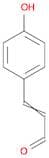
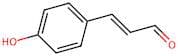
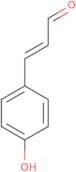
p-Hydroxycinnamaldehyde, also known as 4-hydroxycinnamaldehyde, is an organic compound with the molecular formula C9H8O2. It features a phenolic hydroxyl group and an aldehyde functional group, which contribute to its reactivity and biological activity. This compound typically appears as a yellow to brown crystalline solid and has a characteristic aromatic odor. It is soluble in organic solvents such as ethanol and acetone but has limited solubility in water. p-Hydroxycinnamaldehyde is known for its antioxidant properties and has been studied for its potential therapeutic effects, including anti-inflammatory and antimicrobial activities. It is often used in the food and cosmetic industries as a flavoring agent and fragrance, respectively. Additionally, it serves as a valuable intermediate in organic synthesis, particularly in the production of various pharmaceuticals and agrochemicals. Its stability and reactivity make it a compound of interest in both research and industrial applications.
Formula:C9H8O2
InChI:InChI=1S/C9H8O2/c10-7-1-2-8-3-5-9(11)6-4-8/h1-7,11H
InChI key:InChIKey=CJXMVKYNVIGQBS-UHFFFAOYSA-N
SMILES:C(=CC=O)C1=CC=C(O)C=C1
Synonyms:- (2E)-3-(4-Hydroxyphenyl)acrylaldehyd
- (2E)-3-(4-Hydroxyphenyl)acrylaldehyde
- 2-Propenal, 3-(4-hydroxyphenyl)-
- 2-propenal, 3-(4-hydroxyphenyl)-, (2E)-
- 3-(4-Hydroxyphenyl)-2-propenal
- 4-Hydroxycinnamaldehyde
- Cinnamaldehyde, p-hydroxy-
- p-Coumaraldehyde
- p-Coumaroyl aldehyde
- p-Hydroxycinnamaldehyde
- 3-(4-hydroxyphenyl)acrylaldehyde
- AT-51103
- See more synonyms
Sort by
Purity (%)
0
100
|
0
|
50
|
90
|
95
|
100
Found 5 products.
3-(4-Hydroxyphenyl)acrylaldehyde
CAS:Formula:C9H8O2Purity:95%Color and Shape:SolidMolecular weight:148.15863-(4-Hydroxyphenyl)Acrylaldehyde
CAS:3-(4-Hydroxyphenyl)AcrylaldehydePurity:99%Molecular weight:148.16g/molp-Coumaraldehyde
CAS:Controlled ProductStability Light Sensitive
Applications p-Coumaraldehyde is a potential antitumor agents extracted from cucumbers. p-Coumaraldehyde was shown to significantly inhibit the cancer cell growth in a dose-dependent manner
References Varbanova. M., et al.: Plant. Physiol., 157, 1056 (2011); Wu, W.B., et al.: Bioorg. Med. Chem. Lett.,22, 1895 (2012);Formula:C9H8O2Color and Shape:NeatMolecular weight:148.164-Hydroxycinnamaldehyde
CAS:4-Hydroxycinnamaldehyde (4HC) is a biofuel that is used as a precursor to 4-hydroxybenzoic acid, which is a precursor to the anti-inflammatory drug phenylbutazone. 4HC has been shown to inhibit prostate cancer cell growth by inducing apoptosis and cell cycle arrest. It has also been shown to be an effective inhibitor of glycoside derivatives that are responsible for autoimmune diseases. In addition, it has been shown to increase mitochondrial membrane potential and decrease reactive oxygen species production in rat liver mitochondria. The acetate extract of peels from citrus fruits show enzyme activities that are similar to those of 4HC, but at lower concentrations than 4HC.Formula:C9H8O2Purity:Min. 98%Color and Shape:PowderMolecular weight:148.16 g/mol