CAS 2539-53-9
:4-Ethoxy-3-hydroxybenzaldehyde
Description:
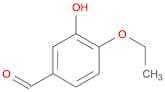
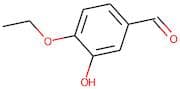
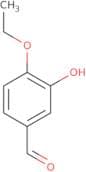
4-Ethoxy-3-hydroxybenzaldehyde, with the CAS number 2539-53-9, is an organic compound characterized by its aromatic structure, which includes a benzaldehyde functional group and both ethoxy and hydroxy substituents. This compound typically appears as a pale yellow to light brown liquid or solid, depending on its purity and form. It is soluble in organic solvents such as ethanol and ether but has limited solubility in water due to its hydrophobic ethoxy group. The presence of the hydroxy group contributes to its potential reactivity, allowing for hydrogen bonding and influencing its chemical behavior in various reactions, such as electrophilic aromatic substitution. 4-Ethoxy-3-hydroxybenzaldehyde may be utilized in organic synthesis, particularly in the development of pharmaceuticals and agrochemicals, due to its functional groups that can participate in further chemical transformations. Additionally, it may exhibit biological activity, making it of interest in medicinal chemistry. Proper handling and storage are essential, as with many organic compounds, to ensure safety and stability.
Formula:C9H10O3
InChI:InChI=1S/C9H10O3/c1-2-12-9-4-3-7(6-10)5-8(9)11/h3-6,11H,2H2,1H3
InChI key:InChIKey=BCLVKHGKEGFPJV-UHFFFAOYSA-N
SMILES:O(CC)C1=C(O)C=C(C=O)C=C1
Synonyms:- 3-Hydroxy-4-ethoxybenzaldehyde
- Benzaldehyde, 4-ethoxy-3-hydroxy-
- Brn 2048366
- Ethylisovanilline
- Isoethylvanillin
- 4-08-00-01765 (Beilstein Handbook Reference)
- 4-Ethoxy-3-hydroxybenzaldehyde
- 4-Ethoxy-3-hydroxybenzaldehyde
Sort by
Purity (%)
0
100
|
0
|
50
|
90
|
95
|
100
Found 3 products.
4-Ethoxy-3-hydroxybenzaldehyde
CAS:4-Ethoxy-3-hydroxybenzaldehydePurity:≥95%Molecular weight:166.17g/mol4-Ethoxy-3-hydroxybenzaldehyde
CAS:4-Ethoxy-3-hydroxybenzaldehyde (4EHB) is a thioacetal that has been shown to be an effective precursor for the synthesis of many other molecules, such as combretastatin a-4. It is prepared by reaction of ethylmagnesium bromide and acetone. 4EHB has been shown to have antifungal properties in vitro, and can be used in the treatment of cancer cells. This compound is volatile and can be easily detected with headspace techniques. The functional group of this molecule is an alcohol group, which is found on the ring structure. Spectroscopic analysis shows that it has a carbonyl group with an OH group attached to it.
Formula:C9H10O3Purity:Min. 95%Color and Shape:Colorless PowderMolecular weight:166.17 g/molRef: 3D-FE71570
Discontinued product