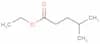
CAS 25415-67-2
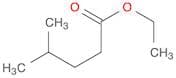
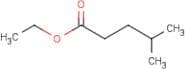
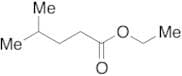
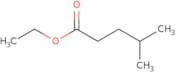
:Ethyl 4-methylpentanoate
Description:
Ethyl 4-methylpentanoate is an ester characterized by its fruity aroma and is commonly used in flavoring and fragrance applications. It is formed from the reaction of 4-methylpentanoic acid and ethanol, resulting in a compound that typically exhibits a pleasant, sweet scent reminiscent of tropical fruits. The molecular formula of ethyl 4-methylpentanoate reflects its structure, which includes a five-carbon chain with a branching methyl group, contributing to its unique properties. This compound is generally colorless to pale yellow in appearance and is soluble in organic solvents while being less soluble in water. Ethyl 4-methylpentanoate has a relatively low boiling point, making it volatile, which is advantageous for its use in perfumery and food flavoring. Additionally, it is important to handle this substance with care, as with many esters, it may cause irritation upon contact with skin or eyes. Overall, ethyl 4-methylpentanoate is valued for its sensory attributes and versatility in various industrial applications.
Formula:C8H16O2
InChI:InChI=1S/C8H16O2/c1-4-10-8(9)6-5-7(2)3/h7H,4-6H2,1-3H3
InChI key:InChIKey=OFQRUTMGVBMTFQ-UHFFFAOYSA-N
SMILES:C(CCC(C)C)(OCC)=O
Synonyms:- Ethyl 4-Methylpentanoate
- Ethyl 4-methylvalerate
- Ethyl isohexanoate
- Pentanoic acid, 4-methyl-, ethyl ester
- Valeric acid, 4-methyl-, ethyl ester
- Ethyl isocaproate
Sort by
Purity (%)
0
100
|
0
|
50
|
90
|
95
|
100
Found 5 products.
4-Methylvaleric Acid Ethyl Ester
CAS:Controlled ProductFormula:C8H16O2Color and Shape:NeatMolecular weight:144.21Ethyl 4-methylvalerate
CAS:Ethyl 4-methylvalerate is a fatty acid ester that is used in the preparation of perfumes. It has a light, floral odor and is used in perfumes to provide a sweet, fruity note. Ethyl 4-methylvalerate is also used as an intermediate for the production of other chemicals such as ethyl esters and diethyl succinate. This chemical can be synthesized by reacting linolenic acid with methyl myristate in the presence of hydroxyl group. A sample preparation technique known as solid phase microextraction can be used to extract this compound from samples containing fatty acids and fatty acid esters. This chemical is also found naturally in various foods such as milk, butter, and cheese.Formula:C8H16O2Purity:Min. 95%Molecular weight:144.21 g/mol