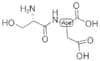
CAS 2543-31-9
:ser-asp
Description:
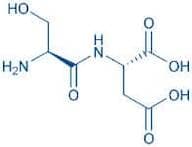
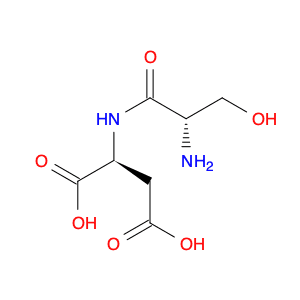
The chemical substance known as "ser-asp," with the CAS number 2543-31-9, is a dipeptide composed of the amino acids serine and aspartic acid. It is characterized by its specific sequence, where serine (Ser) is linked to aspartic acid (Asp) through a peptide bond. This compound is typically found in various biological systems and may play a role in metabolic processes or cellular signaling. Ser-asp exhibits properties common to peptides, such as solubility in water and the ability to form hydrogen bonds due to the presence of polar functional groups. Additionally, it may participate in biochemical reactions, acting as a substrate or a signaling molecule. The presence of both an alcohol group from serine and a carboxylic acid group from aspartic acid contributes to its reactivity and potential interactions with other biomolecules. Overall, ser-asp is an important compound in biochemistry, reflecting the complexity and diversity of peptide structures and functions in living organisms.
Formula:C7H12N2O6
Synonyms:- H-Ser-Asp-OH
Sort by
Purity (%)
0
100
|
0
|
50
|
90
|
95
|
100
Found 4 products.
H-Ser-Asp-OH
CAS:Bachem ID: 4009225.
Formula:C7H12N2O6Purity:> 99%Color and Shape:White Crystalline PowderMolecular weight:220.18H-Ser-Asp-OH
CAS:H-Ser-Asp-OH is a peptide that is the product of the prokaryotic gene, mycobacterium avium. It has been shown to inhibit the translation of mRNA into protein in mycobacteria. H-Ser-Asp-OH also has an anti-inflammatory effect on human cells by inhibiting the synthesis of prostaglandins. This peptide also has antiviral properties and can be used as a treatment for chronic kidney disease (CKD) and hepatitis C. The drug is not effective against HIV infection or hepatitis B virus, however, because it does not inhibit reverse transcriptase or bind to viral DNA.Formula:C7H12N2O6Purity:Min. 95 Area-%Color and Shape:PowderMolecular weight:220.18 g/mol