CAS 254753-54-3
:Monastrol
Description:
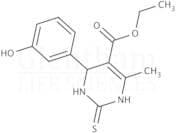
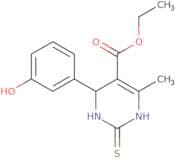
Monastrol is a small molecule inhibitor primarily known for its role in disrupting the function of kinesin-5, a motor protein involved in mitosis. It is characterized by its ability to inhibit cell division, making it a subject of interest in cancer research. Monastrol is typically described as a white to off-white solid with moderate solubility in organic solvents. Its molecular structure features a unique arrangement that allows it to selectively bind to the kinesin-5 motor domain, thereby preventing the proper functioning of this protein during the mitotic process. This inhibition leads to the disruption of spindle formation and ultimately results in cell cycle arrest. Monastrol has been utilized in various studies to explore its potential as a therapeutic agent in cancer treatment, particularly in targeting rapidly dividing cells. Additionally, its specificity for kinesin-5 makes it a valuable tool for studying the mechanics of cell division and the role of motor proteins in cellular processes.
Formula:C14H16N2O3S
InChI:InChI=1/C14H16N2O3S/c1-3-19-13(18)11-8(2)15-14(20)16-12(11)9-5-4-6-10(17)7-9/h4-7,12,17H,3H2,1-2H3,(H2,15,16,20)
SMILES:CCOC(=O)C1=C(C)N=C(NC1c1cccc(c1)O)S
Synonyms:- ethyl (4S)-4-(3-hydroxyphenyl)-6-methyl-2-thioxo-1,2,3,4-tetrahydropyrimidine-5-carboxylate
- ethyl (4R)-4-(3-hydroxyphenyl)-6-methyl-2-thioxo-1,2,3,4-tetrahydropyrimidine-5-carboxylate
- Ethyl 4-(3-Hydroxyphenyl)-6-Methyl-2-Thioxo-1,2,3,4-Tetrahydropyrimidine-5-Carboxylate
- 5-Pyrimidinecarboxylicacid, 1,2,3,4-tetrahydro-4-(3-hydroxyphenyl)-6-methyl-2-thioxo-, ethyl ester
- 6-Methyl-4-(3-hydroxyphenyl)-2-thioxo-1,2,3,4-tetrahydropyrimidine-5-carboxylicacid ethyl ester
Sort by
Purity (%)
0
100
|
0
|
50
|
90
|
95
|
100
Found 4 products.
(S)-Monastrol
CAS:Monastrol is a potent and cell-permeable inhibitor of the mitotic kinesin Eg5.Formula:C14H16N2O3SPurity:98%Color and Shape:SolidMolecular weight:292.35Monastrol
CAS:Monastrol is a natural compound that has been shown to induce apoptosis in cancer cells. It binds to the mitochondrial membrane, thereby causing mitochondrial membrane depolarization and inhibiting ATP production. Monastrol also inhibits axonal growth by blocking tubulin polymerization, which is required for axon elongation. This drug is being investigated as a potential treatment for skin cancers and leishmaniasis. Monastrol has been shown to inhibit the proliferation of carcinoma cell lines and to reduce metastasis in animals models. Preparative high pressure liquid chromatography (HPLC) has been used to isolate monastrol from Anhydrous Sodium Monastearate (ASM).Formula:C14H16N2O3SPurity:Min. 95%Molecular weight:292.35 g/mol