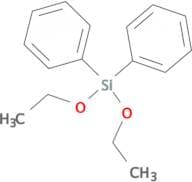
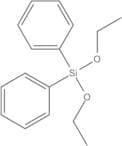
CAS 2553-19-7
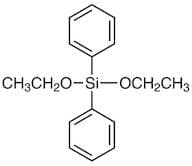
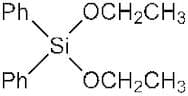
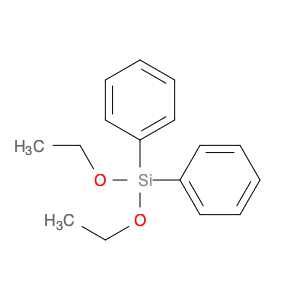
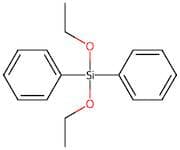
:Diphenyldiethoxysilane
- 1,1′-(Diethoxysilylene)bis[benzene]
- Benzene, 1,1′-(diethoxysilylene)bis-
- Cd6000
- Diphenyldiethoxysilane
- Diphenyldiethoxysilane,min.97%
- Kbe 202
- Kbm 202Ls5990
- Keb 202
- Ls 5990
- NSC 77127
- Silane, diethoxydiphenyl-
- Tsl 8177
- See more synonyms
Diethoxydiphenylsilane
CAS:Formula:C16H20O2SiPurity:>98.0%(GC)Color and Shape:Colorless to Almost colorless clear liquidMolecular weight:272.42Diethoxydiphenylsilane, 98%
CAS:Reagent for preparation of diphenylsilylene derivatives of diols by exchange. This Thermo Scientific Chemicals brand product was originally part of the Alfa Aesar product portfolio. Some documentation and label information may refer to the legacy brand. The original Alfa Aesar product / item code or
Formula:C16H20O2SiPurity:98%Color and Shape:Clear colorless to dark yellow, LiquidMolecular weight:272.42Diethoxydiphenylsilane
CAS:Formula:C16H20O2SiPurity:97%Color and Shape:LiquidMolecular weight:272.4143Diphenyldiethoxysilane
CAS:S07825 - Diphenyldiethoxysilane
Formula:C16H20O2SiPurity:95%Color and Shape:Liquid, ClearMolecular weight:272.419DIPHENYLDIETHOXYSILANE
CAS:Arylsilane Cross-Coupling Agent
The cross-coupling reaction is a highly useful methodology for the formation of carbon-carbon bonds. It involves two reagents, with one typically being a suitable organometallic reagent - the nucleophile - and the other a suitable organic substrate, normally an unsaturated halide, tosylate or similar - the electrophile.
Aromatic Silane - Conventional Surface Bonding
Aliphatic, fluorinated aliphatic or substituted aromatic hydrocarbon substituents are the hydrophobic entities which enable silanes to induce surface hydrophobicity. The organic substitution of the silane must be non-polar. The hydrophobic effect of the organic substitution can be related to the free energy of transfer of hydrocarbon molecules from an aqueous phase to a homogeneous hydrocarbon phase. A successful hydrophobic coating must eliminate or mitigate hydrogen bonding and shield polar surfaces from interaction with water by creating a non-polar interphase. Although silane and silicone derived coatings are in general the most hydrophobic, they maintain a high degree of permeability to water vapor. This allows coatings to breathe and reduce deterioration at the coating interface associated with entrapped water. Since ions are not transported through non-polar silane and silicone coatings, they offer protection to composite structures ranging from pigmented coatings to rebar reinforced concrete. A selection guide for hydrophobic silanes can be found on pages 22-31 of the Hydrophobicity, Hydrophilicity and Silane Surface Modification brochure.
Diphenyldiethoxysilane; Diethoxydiphenylsilane; 1,1'-(Diethoxysilylene)bis-benzene
Vapor pressure, 125 °: 2 mmAlternative to phenyltriethoxysilane for the cross-coupling of a phenyl groupProvides hydrophobic coatings with good thermal and UV resistanceDialkoxy silaneFormula:C16H20O2SiPurity:97%Color and Shape:Straw LiquidMolecular weight:272.42