CAS 25639-42-3
:Methylcyclohexanol
Description:
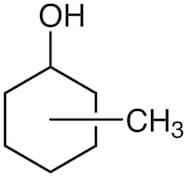
Methylcyclohexanol is a cyclic alcohol characterized by its molecular structure, which consists of a cyclohexane ring with a methyl group and a hydroxyl group attached. This compound typically exists as a colorless liquid with a mild, pleasant odor. It is known for its moderate solubility in water and good solubility in organic solvents, making it useful in various applications, including as a solvent and in the synthesis of other chemical compounds. Methylcyclohexanol exhibits properties typical of alcohols, such as the ability to form hydrogen bonds, which contributes to its boiling point and reactivity. The presence of the hydroxyl group allows for potential reactions such as dehydration and oxidation. Additionally, it is important to handle this substance with care, as it may pose health risks if inhaled or ingested, and proper safety measures should be observed during its use. Overall, methylcyclohexanol is a versatile compound with applications in industrial and laboratory settings.
Formula:C7H14O
InChI:InChI=1/3C7H14O/c1-6-2-4-7(8)5-3-6;1-6-3-2-4-7(8)5-6;1-6-4-2-3-5-7(6)8/h3*6-8H,2-5H2,1H3
SMILES:CC1CCC(CC1)O.CC1CCCC(C1)O.CC1CCCCC1O
Synonyms:- 2-Methylcyclohexan-1-Ol
- 3-Methylcyclohexan-1-Ol
- 4-Methylcyclohexan-1-Ol
- Cyclohexanol, methyl-
- Hexahydrocresol
- Hexahydromethylphenol
- Methyl cyclohexanol (mixed isomers)
- Methylcyclohexanol
- Methylhexalin
Sort by
Purity (%)
0
100
|
0
|
50
|
90
|
95
|
100
Found 3 products.
Methylcyclohexanol (2-,3-,4- and cis-,trans- mixture)
CAS:Formula:C7H14OPurity:>88.0%(GC)Color and Shape:Colorless to Light yellow clear liquidMolecular weight:114.19Methylcyclohexanol (2-,3-,4- and cis-,trans- mixture)
CAS:Methylcyclohexanol (2-,3-,4- and cis-,trans- mixture)Formula:C7H14OPurity:>88.0%Molecular weight:114.19Methylcyclohexanol
CAS:Methylcyclohexanol is a solvent that can be used for the preparation of organic compounds. It has two enantiomers, which are mirror images of each other. The two enantiomers have different reaction rates and react differently with other molecules. Methylcyclohexanol is both an organic solvent and a diluent and can be used as a reaction medium in chemical reactions. This substance is not combustible, but it is oxidized by nitric acid to produce nitrobenzene. Nitrobenzene is then converted into hydrochloric acid and various oxidation products, including hippuric acid. Methylcyclohexanol also reacts with sulfuric acid to form hydrogen sulfide and methylcyclohexyl sulfate. With hydrochloric acid, it forms methylcyclohexanone, which is a molecule consisting of two divalent hydrocarbon groups attached to one another by an oxygen atom. This compound exists in one or more stereoisomer formsFormula:C7H14OPurity:Min. 95%Molecular weight:114.18 g/mol